

Updated November 16, 2026.
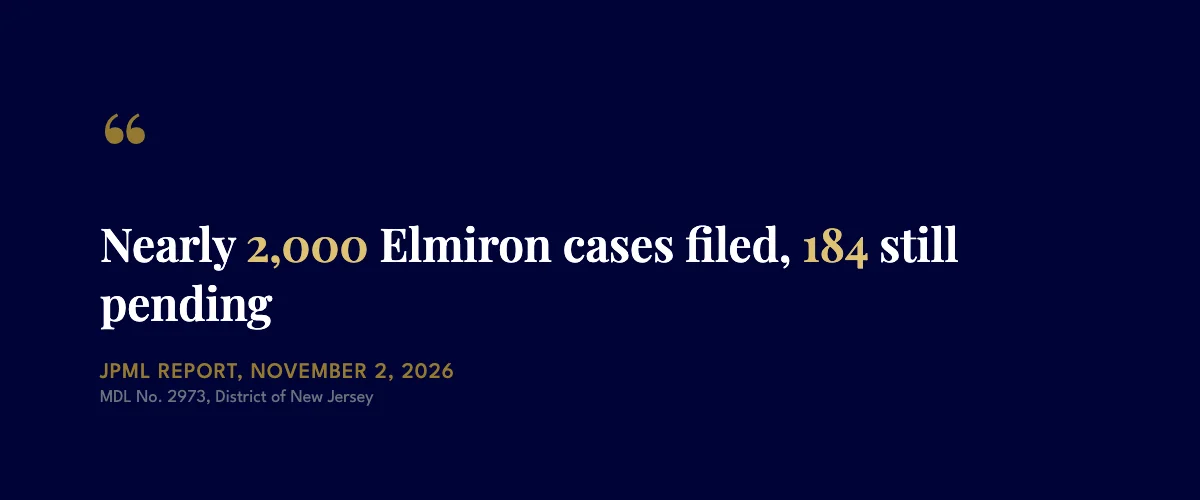
Elmiron lawsuits claim that long-term use of Elmiron (pentosan polysulfate sodium), a drug for the bladder condition interstitial cystitis, caused a type of eye damage called pigmentary maculopathy, and that Janssen Pharmaceuticals did not warn patients and doctors in time. Federal cases are consolidated in MDL No. 2973 in New Jersey. Nearly 2,000 cases have been filed there, and 184 were still pending in the Judicial Panel on Multidistrict Litigation’s November 2, 2026 report, so the litigation is winding down. It is not a class action. Each person brings an individual claim.
If you took Elmiron and have been diagnosed with maculopathy or unexplained vision problems, the most important question now is whether your claim is still within Illinois deadlines.
What Elmiron is
Elmiron was approved by the FDA in 1996 and for years was the only oral drug approved specifically for interstitial cystitis, a chronic condition that causes bladder pain and pressure. Many patients took it daily for years, sometimes more than a decade.
The link to eye damage
In 2018, ophthalmologists at the Emory Eye Center reported six patients with an unusual pattern of damage to the macula, the part of the retina responsible for sharp central vision. All six had taken Elmiron for a long time. Later studies supported the connection, and doctors now describe the condition as pentosan polysulfate maculopathy.
Symptoms can include difficulty reading, trouble adjusting to dim light, blurry or distorted central vision, and dark spots. The damage can be permanent, and some studies have reported that it can continue to progress even after a patient stops taking the drug. The risk appears to rise with higher total exposure over time.
When the warning came
In June 2020, the FDA approved new labeling for Elmiron that added pigmentary maculopathy to the Warnings and Precautions section. The updated label tells doctors to take a detailed eye history before starting the drug and to arrange retinal exams, at the start of treatment and periodically while patients stay on it.
That date matters to the lawsuits. Patients who took Elmiron for years before 2020 were not warned about vision risks on the U.S. label. Plaintiffs argue Janssen knew or should have known about the risk earlier and should have warned sooner. That is a failure-to-warn claim, which we explain in our post on failure to warn claims in Illinois.
Where the litigation stands
Federal Elmiron cases were consolidated as In re: Elmiron (Pentosan Polysulfate Sodium) Products Liability Litigation, MDL No. 2973, in the U.S. District Court for the District of New Jersey before Judge Brian R. Martinotti. The JPML’s November 2, 2026 report listed 184 pending cases, out of nearly 2,000 filed over the life of the MDL.
The drop reflects cases that have been resolved or dismissed. Where cases have settled, the terms have not been made public, and no global settlement amount has been announced. Be cautious with any website that quotes a specific average payout for Elmiron cases. Each claim is valued on its own facts, mainly how much vision was lost and how long the person took the drug.
Because this is an MDL and not a class action, there is no class to “join” and no automatic payment. A person who wants compensation needs to bring their own claim. Our guide on how mass torts work explains the difference.
Who may still have a claim
Claims generally involve people who took Elmiron over a long period and were later diagnosed by an eye doctor with pigmentary maculopathy or a related retinal injury. The diagnosis matters more than the symptoms alone, because other conditions such as age-related macular degeneration can look similar. A retina specialist’s findings and imaging are usually central to the case.
Pharmacy history showing how long you took Elmiron, and at what dose, is the starting point. Eye exam records from before and after your diagnosis matter just as much, especially any note showing when a doctor first connected your vision problems to the drug.
Illinois deadlines
Illinois generally allows two years to file a personal injury claim (735 ILCS 5/13-202). In drug cases, Illinois courts apply a discovery rule, so the two years usually start when you knew or reasonably should have known that you were injured and that the drug may have caused it.
For most Elmiron users, that clock may have started years ago. The FDA warning in 2020 and the wide coverage of the lawsuits since then are the kind of events a defense lawyer will point to as the moment a patient should have made the connection. Illinois also has a product liability statute of repose, 735 ILCS 5/13-213, that can bar claims tied to products sold long ago. If your diagnosis is recent, or you only recently learned it may be linked to Elmiron, talk to a lawyer quickly so the dates can be checked.
You do not usually have a claim against the doctor who prescribed Elmiron before the 2020 warning, since the label did not describe the risk. A separate medical malpractice question can arise if a doctor kept prescribing it after the warning without recommending eye exams, or ignored symptoms. That depends on the facts.
If you took Elmiron
Do not stop a prescribed medication without talking to your doctor. Ask whether you should still be taking Elmiron, and ask for a referral to an ophthalmologist or retina specialist for a dilated exam with retinal imaging if you have not had one.
Request your pharmacy records and keep them with your eye exam results. Write down when you first noticed vision changes and when a doctor first mentioned Elmiron as a possible cause.
The same pattern of a drug linked to vision loss after years of use is now playing out with GLP-1 drugs. See our post on Ozempic and the FDA’s new NAION vision loss warning.
Talk to a Chicago defective drug lawyer
Phillips Law Offices handles defective drug cases and mass tort claims for people across Illinois. We can review your pharmacy and eye records and tell you whether your claim is still within the deadline. The consultation is free, and you pay no fee unless we recover compensation for you.
Call (312) 346-4262 or book a free consultation online.
Frequently asked questions
Is there an Elmiron class action lawsuit?
No. Federal Elmiron cases are consolidated in MDL No. 2973 in New Jersey, which is not a class action. Each person brings an individual claim, and there is no class to join or automatic payment.
Has Elmiron settled?
Many cases have been resolved, and the number of pending federal cases has fallen to 184 out of nearly 2,000 filed, according to the JPML’s November 2, 2026 report. Settlement terms have not been made public, and no global settlement amount has been announced.
What eye damage is linked to Elmiron?
Pigmentary maculopathy, damage to the macula of the retina that can make reading and seeing in dim light difficult and can cause loss of central vision. It was first reported in 2018, and the FDA added it to Elmiron’s warnings in June 2020.
Is it too late to file an Elmiron claim in Illinois?
It may be. Illinois generally allows two years from when you knew or should have known about the injury and its possible cause, and a statute of repose can bar older product claims. If your diagnosis or your discovery of the link is recent, have a lawyer check the dates right away.
Should I stop taking Elmiron?
Talk to your doctor before stopping any medication. Ask whether Elmiron is still right for you and request a retinal exam if you have not had one, as the FDA-approved label recommends.