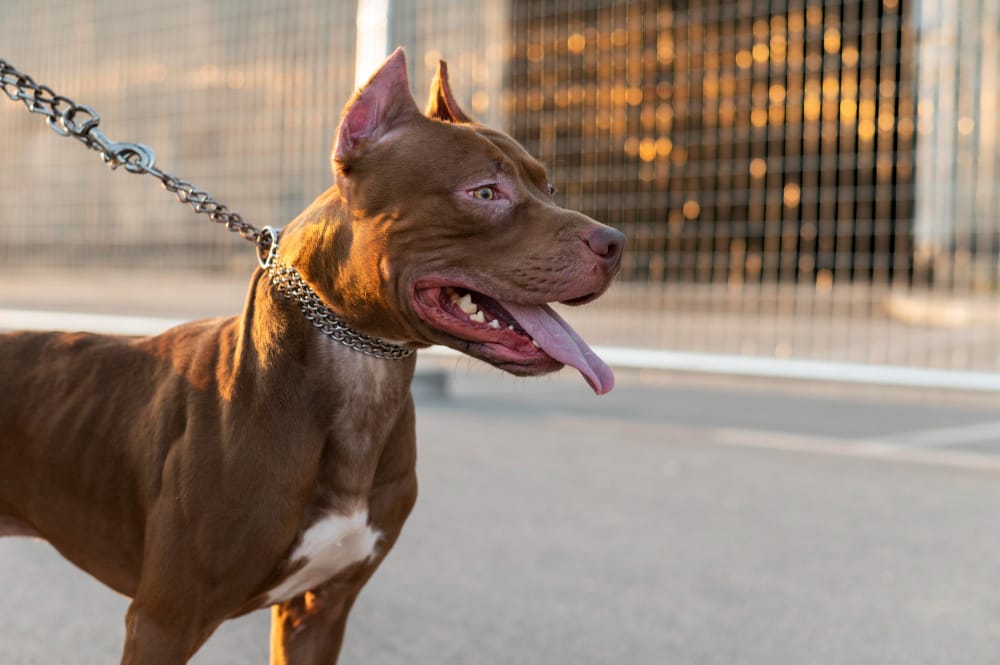


Chicago Animal Attack Attorney
Bitten or attacked by a dog or other animal in Chicago, Cook County, or the collar counties? Illinois imposes strict liability on the owner under the Animal Control Act. Phillips Law Offices has handled serious dog-bite and animal-attack cases across Illinois since 1945. Free consultation. No fee unless we win.
The Centers for Disease Control estimates more than 4.5 million Americans are bitten by dogs every year, and roughly one in five of those bites requires medical care. Chicago sees its share – in parks, in alleys, on rental porches, and at front doors when delivery and mail carriers approach. Children take the worst of it, with facial bites and scarring that follow them for life. If you or a family member was attacked by a dog or other animal in Chicago, Cook County, or the collar counties, the lawyers at Phillips Law Offices are ready to identify the owner, the landlord, and any other responsible party, lock down the evidence, and pursue every dollar of compensation the law allows.

Recognized for results in Illinois personal-injury law
Eight decades of trial work has put the firm and its lawyers on the lists that matter. A sample of the recognitions on file:
Super Lawyers
Personal Injury – Plaintiff
Million Dollar Advocates Forum
Member
Multi-Million Dollar Advocates Forum
Member
Best Lawyers in America
Personal Injury Litigation – Plaintiffs
AV Preeminent
Martindale-Hubbell peer rating
Illinois Trial Lawyers Association
Member in good standing
American Association for Justice
Member
Chicago Bar Association
Member
No aspect of these advertisements has been approved by the Supreme Court of Illinois. Past results do not guarantee future outcomes.
Common animal-attack cases we handle in Chicago
- Unprovoked dog attacks on visitors, mail and package carriers, runners, joggers, cyclists, and children walking through Chicago neighborhoods.
- Landlord liability where a known-dangerous dog was kept on rental property and management failed to act on prior complaints.
- Off-leash incidents in Chicago parks – Lincoln Park, Humboldt Park, Grant Park, Jackson Park, Marquette Park, Douglass Park, and along the Lakefront Trail.
- Attacks at vacation rentals (Airbnb, VRBO) and during dog-walker or pet-sitter care, where the booking platform and the sitter both carry coverage.
- Attacks while the victim was lawfully on the property – delivery drivers, meter readers, social guests, and contractors performing invited work.
- Working and security dogs kept at warehouses, scrapyards, and commercial sites in industrial corridors on the West and South Sides.
- Cat scratches with serious infection, including Bartonella (cat-scratch disease) and severe Pasteurella infections requiring IV antibiotics.
- Horse, livestock, and exotic-pet attacks on farms, at petting zoos, and at rural Cook, DuPage, Lake, and Will County properties.
- Rabies-exposure cases requiring post-exposure prophylaxis when the attacking animal cannot be located or its vaccination status cannot be confirmed.
Injuries that bring families to an animal attack lawyer
- Puncture wounds and crush-bite injuries to the hands, forearms, calves, and thighs
- Nerve damage and tendon laceration requiring orthopedic and hand-surgery repair
- Facial disfigurement and permanent scarring, especially in child victims attacked at face height
- Infection from oral flora – Capnocytophaga, Pasteurella, MRSA, and group A Streptococcus
- Psychological injury including cynophobia (fear of dogs) and post-traumatic stress disorder, common in pediatric attacks
- Traumatic brain injury from being knocked down by a large dog and striking the head on pavement or concrete
- Avulsion injuries (skin and tissue torn from the body) and degloving injuries
- Wrongful death – rare, but seen with multi-dog attacks and with elderly or infant victims
The Illinois law that drives a dog-bite case
- Illinois Animal Control Act, strict liability: 510 ILCS 5/16. The owner is strictly liable when the victim was lawfully on the premises and did not provoke the animal. No prior-bite history required.
- Definition of “dog” and “owner”: 510 ILCS 5/2.05 – a person who keeps, harbors, or has custody of the animal can be an “owner” even without legal title.
- Statute of limitations – personal injury: two years under 735 ILCS 5/13-202.
- Modified comparative fault (50% bar): 735 ILCS 5/2-1116. Provocation is the defense most often raised.
- Premises Liability Act: 740 ILCS 130/2. Drives landlord and keeper liability when management knew the animal was dangerous.
- Tort Immunity Act: 745 ILCS 10/8-101. Applies when a CPD K-9 or other police or government animal causes the injury – one-year statute and formal notice required.
- Wrongful death: 740 ILCS 180/2 (2-year window).
- Chicago Municipal Code 7-12-030 (leash law) – violation supports negligence per se in addition to the strict-liability claim.
Who can be held liable
Unlike a typical negligence case, a dog-bite claim under 510 ILCS 5/16 is strict liability against the owner. But “owner” is read broadly, and other parties can be on the hook depending on the facts.
- The titled owner – the person who legally owns the dog.
- The keeper or harborer – a roommate, partner, dog-walker, sitter, or family member who had custody at the time of the attack.
- The landlord or property manager when management knew the tenant kept a dangerous dog and had the power to remove the animal or refuse to renew the lease.
- A business or property owner who allowed a working or security dog on premises without adequate barriers, warnings, or training.
- A platform or sitter – vacation-rental hosts and dog-walking apps that listed or scheduled the animal without proper screening.
- A government entity in narrow circumstances – subject to the strict notice and limitations rules of the Tort Immunity Act.
What to do in the first 72 hours after a Chicago animal attack
- Get medical attention first. Northwestern Memorial, John H. Stroger Jr. Hospital of Cook County, Rush University Medical Center, and University of Chicago Medicine are the major trauma centers. For a pediatric victim, head to Ann & Robert H. Lurie Children’s Hospital. Even shallow puncture wounds carry serious infection risk and need professional cleaning.
- Report the bite. Illinois law (510 ILCS 5/13) requires every animal bite to be reported to public health. In Cook County, that means the Cook County Department of Animal & Rabies Control. Suburban municipalities also accept reports through local police or animal-control units. The report locks in the date, the animal description, and triggers a rabies-investigation file.
- Identify and document the dog. Get the owner’s name, address, phone, and the dog’s rabies tag or city license number. Photograph the dog, the leash (or lack of one), the fence or enclosure, and the scene. If the owner walks away, witnesses and surveillance footage from nearby buildings are critical.
- Photograph the injuries immediately and again every 48 hours. Bite injuries change appearance fast – initial puncture marks turn into bruises, swelling, and scars. A photographic record over the first two weeks is some of the most useful evidence in the case.
- Save the victim’s torn clothing and any debris from the scene. Do not wash them. Place them in a clean paper bag.
- Call an animal attack lawyer right away. Surveillance footage from doorbell cameras, building lobbies, and neighborhood businesses can lawfully be overwritten on 7 to 30-day cycles. A spoliation letter has to go out fast.
How Phillips Law Offices investigates a Chicago animal attack case
- Day 1 – Spoliation and evidence-preservation letters. We put the owner, the landlord, the property manager, and any platform on written notice to preserve surveillance footage, lease records, prior complaints, vet records, and rabies certificates.
- Public-records pull. We obtain the Cook County Animal & Rabies Control file, the police incident report, prior 311 nuisance-animal complaints, and any building-management complaint log.
- Witness and neighbor canvass. Repeat bites and prior aggression are the keys to a punitive-damages or negligent-keeping claim. We canvass building residents, mail carriers, delivery drivers, and dog walkers in the area.
- Medical workup. We coordinate with treating physicians, pediatric reconstructive surgeons, and mental-health providers. For child victims, we retain a life-care planner to project scar revision surgeries through adolescence and adulthood.
- Insurance and corporate discovery. Most homeowner and renter policies carry $100,000 to $500,000 of liability with dog-bite coverage. Umbrella and excess policies often stack on top. We identify every layer and put the full coverage on the table.
Meet the attorneys who will work on your case

Stephen D. Phillips
Managing Partner. Decades of trial experience in serious-injury and wrongful-death litigation.

Stephen J. Phillips
Partner. Focuses on complex personal-injury and premises-liability cases throughout Illinois.


Terrence M. Quinn
Partner. Litigation focus on catastrophic injury, wrongful death, and trial practice.

Alec D. Mesrobian
Associate. Works on case investigation, discovery, and trial preparation in serious-injury matters.
What our Illinois clients have said
“Stephen Phillips and his team were absolutely incredible to work with. They were professional, responsive, and genuinely cared about my case.”
Reagan Tokoly
“Phillips Law Offices handled my case with professionalism and care. They kept me informed throughout the entire process.”
Brandon DeWitt
“The team at Phillips Law Offices was outstanding. They fought hard for my case and got me the compensation I deserved.”
Dani Berny
Client testimonials reflect individual experiences and are not a guarantee of any particular result. Every case is unique and is evaluated on its own facts.
Frequently asked questions
Is Illinois a strict-liability state for dog bites?
Yes. Illinois imposes strict liability on dog owners under the Animal Control Act, 510 ILCS 5/16. If you were lawfully on the property where the attack happened and did not provoke the animal, you do not have to prove the owner knew the dog had a history of biting. The statute applies to any dog or other animal covered by the Act.
What if I was on the dog owner’s property when bitten?
You can still recover. The Act protects victims who are lawfully on public or private property, including invited guests, repair workers, mail and package carriers, and meter readers. The defenses available to the owner are that you trespassed or that you provoked the dog – both are factual questions for the jury, and provocation has been read narrowly by Illinois courts.
What if the dog had no prior bite history?
Under 510 ILCS 5/16, prior history is not required. Illinois does not follow the common-law one-bite rule. The owner is strictly liable for the first bite if you were lawfully on the premises and did not provoke the dog. Prior bite history is, however, useful to defeat a provocation defense and to support a claim against a landlord who knew about the dangerous animal.
What if the dog was on the loose in a Chicago park?
Off-leash incidents in Chicago parks are common. Chicago Municipal Code 7-12-030 requires dogs to be leashed in public spaces outside designated dog-friendly areas. Violation supports a negligence-per-se claim in addition to the strict-liability claim under 510 ILCS 5/16. Photograph the dog and identify the owner before they leave the scene – park incidents are easier to walk away from than incidents on private property.
Can I sue the landlord if the dog was a tenant’s?
Sometimes. A landlord can be liable under the Premises Liability Act, 740 ILCS 130/2, when the landlord knew the tenant kept a dangerous dog and had the power to remove the animal or refuse to renew the lease. We look at the lease, prior complaints to building management, 311 nuisance-animal complaints, and any police reports tied to the unit.
What if the dog belonged to the police or government?
Attacks involving a Chicago Police Department K-9, a Cook County Sheriff’s dog, or another government animal trigger the Local Governmental and Governmental Employees Tort Immunity Act, 745 ILCS 10/8-101. The statute of limitations shrinks to one year, and a formal notice may be required. Call us immediately – these cases have very short fuses.
Hablamos español
Si usted o un ser querido resultó herido en un ataque de perro o animal en Chicago o en cualquier parte de Illinois, llámenos al (312) 346-4262. La consulta es gratis y no cobramos honorarios a menos que ganemos su caso.
Contact our Chicago animal attack attorney
If you or a family member has been bitten or attacked by a dog or other animal in Chicago, Cook County, DuPage County, Lake County, or Will County, call Phillips Law Offices for a free, no-obligation case review. The sooner we get the spoliation letter out and the public-health and police records pulled, the stronger your case will be. Reach us any time at (312) 346-4262.
Free, confidential case review
Phillips Law Offices, 161 N Clark St #4925, Chicago, IL 60601. Monday-Friday, 9am-5pm. Calls answered 24/7.
Related Phillips Law Offices pages
- Chicago Personal Injury Lawyers (main practice page)
- Premises Liability Attorneys
- Traumatic Brain Injury Lawyers
- Types of Cases Handled by Personal Injury Lawyers
- Professional Negligence Claims
- Contact Phillips Law Offices
Page reviewed by the attorneys at Phillips Law Offices. The information on this page is for general education only and is not legal advice. Reading this page does not create an attorney-client relationship. Past results do not guarantee a similar outcome. No aspect of these advertisements has been approved by the Supreme Court of Illinois.