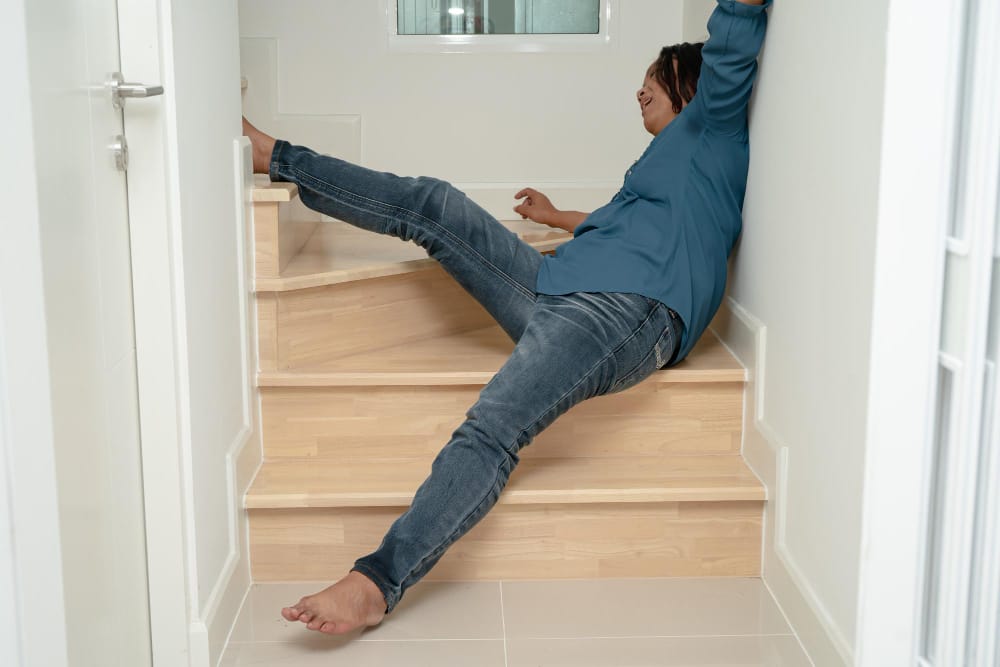


Common Injuries from Falling Down Stairs in Chicago
Falling down stairs can cause serious injuries in seconds. In homes, apartment buildings, stores, offices, parking structures, and transit stations, unsafe stairways can lead to long recovery periods, lost wages, and expensive medical care.
If a dangerous condition contributed to your fall, you may have a legal claim. Our team helps injured people evaluate liability, preserve evidence, and pursue full compensation. For related unsafe-property cases, review our Chicago premises liability lawyer page.
Most Common Stair Fall Injuries
1. Head and Brain Injuries
Head trauma is one of the most serious outcomes in stair accidents. Victims may suffer concussions, contusions, or traumatic brain injuries (TBI), with symptoms including headaches, dizziness, confusion, nausea, and memory issues.
2. Back and Spinal Injuries
Falls can damage discs, vertebrae, and nerves. Herniated discs, spinal fractures, and nerve impingement can produce chronic pain, weakness, numbness, and limited mobility.
3. Neck and Shoulder Injuries
Whiplash-type trauma, cervical strain, and shoulder tears are common in awkward stair falls, especially when a person tries to catch themselves.
4. Fractures and Joint Injuries
Broken wrists, arms, ankles, and hips are frequent in stairway incidents. Older adults are especially vulnerable to hip fractures and long rehabilitation periods.
5. Soft Tissue Injuries
Sprains, ligament tears, deep bruising, and muscle strains may appear minor at first but often worsen over time without treatment.
Where Stair Fall Accidents Happen
- Apartment and condominium stairwells
- Retail stores and shopping centers
- Office buildings and hotels
- Restaurants and entertainment venues
- Parking garages and public transit stations
What Causes Stairway Fall Accidents?
- Poor lighting
- Broken or uneven steps
- Loose carpeting or mats
- Missing or unstable handrails
- Wet, slippery, or cluttered stairs
- Code violations and poor maintenance
What to Do After a Stair Fall Injury
- Get medical care immediately.
- Report the incident to the property owner/manager.
- Take photos of the stairs and surrounding area.
- Collect witness names and contact details.
- Keep records of treatment, expenses, and missed work.
- Speak with a personal injury attorney before giving detailed statements to insurers.
Can You Recover Compensation?
Depending on the facts, compensation may include medical bills, rehabilitation costs, lost income, reduced earning capacity, pain and suffering, and other damages.
Illinois claims are time-sensitive. Many personal injury cases have filing deadlines, so acting early helps protect your rights and preserve evidence.
Why Legal Help Matters
Stair fall claims often involve contested liability. Property owners and insurers may argue the hazard was obvious or that the victim caused the fall. A strong case requires evidence of negligence, documentation of injuries, and clear proof of damages.
Phillips Law Offices has represented injured people in Chicago for decades. If you were hurt in a stair accident, call (312) 346-4262 or contact us for a free case review.
Related Practice Areas
FAQ: Stair Fall Injury Claims in Illinois
How long do I have to file a stair fall lawsuit in Illinois?
Many personal injury claims are subject to a two-year deadline, but exceptions can apply. Confirm deadlines quickly with an attorney.
What if I was partly at fault for the fall?
Illinois uses modified comparative fault. You may still recover damages if you are not more than 50% at fault, with compensation reduced by your share of fault.
Do I need medical records to start a claim?
Yes. Medical documentation is one of the most important parts of proving injury severity and treatment costs.
What evidence helps prove a stairway claim?
Photos, incident reports, witness statements, maintenance records, code-violation evidence, and medical records are all useful.
If your case involves head trauma symptoms, review our Traumatic Brain Injury page for claim guidance and next steps.