
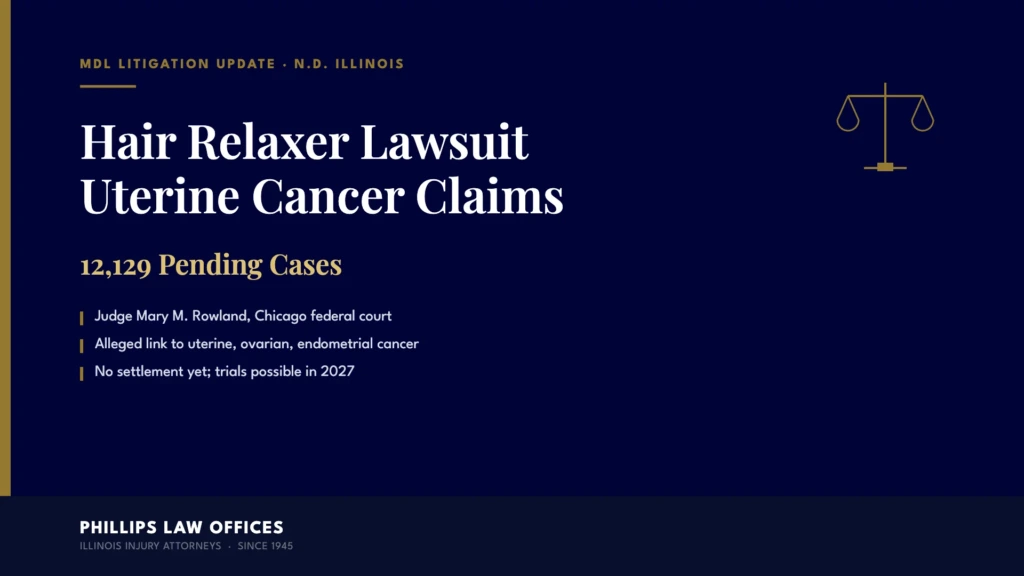
A large federal court case is moving through Chicago that could affect thousands of women across Illinois and the country: the Hair Relaxer Marketing, Sales Practices, and Products Liability Litigation, known as MDL No. 3060. As of September 2026, the case consolidates 12,129 pending lawsuits (per the official U.S. Judicial Panel on Multidistrict Litigation case count) before U.S. District Judge Mary M. Rowland in the Northern District of Illinois, making it one of the largest active mass tort cases in the country, and one being decided just blocks from the Loop.
If you or a family member used chemical hair relaxers or straighteners for years and later developed uterine, ovarian, or endometrial cancer, this litigation may be directly relevant to you.
What Is the Hair Relaxer Litigation About?
Plaintiffs allege that long-term use of chemical hair relaxers exposed them to hormone-disrupting chemicals, including phthalates, bisphenol A (BPA), cyclosiloxanes, and formaldehyde-releasing agents, that significantly increased their risk of developing uterine, ovarian, and endometrial cancer. The lawsuits name major manufacturers including L’Oréal, Revlon, SoftSheen-Carson, Dabur (Namaste), Strength of Nature, and several other well-known hair care brands.
The litigation gained national attention after a 2022 study funded by the National Institutes of Health found that women who used chemical hair straightening products frequently had a meaningfully higher risk of developing uterine cancer compared to women who never used them. The study did not identify a specific chemical or brand responsible, which is part of what the current litigation is trying to sort out through expert testimony and scientific discovery.
Why Is This Case in Chicago?
When large numbers of similar product liability lawsuits are filed across the country, the federal court system can consolidate them before a single judge for shared pretrial proceedings, things like expert witness disputes, document discovery, and pretrial motions. That is what happened here: the Judicial Panel on Multidistrict Litigation transferred the hair relaxer cases to the Northern District of Illinois, where Judge Rowland now oversees the coordinated pretrial process.
This does not mean every case will be decided in Chicago forever. Consolidation is for efficiency during the pretrial phase. Depending on how the litigation develops, individual cases may eventually be sent back to the courts where they were originally filed for trial.
Where the Litigation Stands as of September 2026
As of this writing, the case is still in the expert discovery and motion phase. No court has ruled that hair relaxers cause cancer, no manufacturer has been found liable, and no global settlement has been reached. Legal analysts following the case expect Judge Rowland to rule on key admissibility disputes over expert scientific testimony (known as Daubert motions) in the months ahead, with bellwether trials, test cases meant to help gauge how juries might view the evidence, potentially beginning in 2027.
That timeline matters for anyone considering a claim: this is an active, ongoing case, not one that has already resolved or closed its doors to new plaintiffs.
Do You Have to Have Used a Specific Brand?
Not necessarily. Because the litigation involves multiple manufacturers, claims can generally proceed against whichever brand or brands a woman used regularly over a period of years, provided she was later diagnosed with a qualifying cancer. What matters most is a documented history of frequent, long-term use (generally several times a year over multiple years) and a subsequent cancer diagnosis.
Illinois Deadlines to File a Hair Relaxer Claim
Illinois law generally gives injury victims two years from the date they discovered, or reasonably should have discovered, both the injury and its likely cause to file a personal injury lawsuit. Because these injuries often surface years after the relevant exposure, and the science connecting specific products to specific cancers has only recently come into public view, many women may still be within that window even if their diagnosis happened some time ago. An attorney can review the specific dates involved in your case to determine whether you still have time to file.
Frequently Asked Questions
Has anyone won money in the hair relaxer lawsuit yet?
No. As of September 2026, no trial verdict or settlement has been reached in the federal MDL. The case is still in the pretrial phase, with bellwether trials possibly beginning in 2027.
What cancers are covered by this litigation?
Most claims involve uterine cancer, though related claims for ovarian cancer, endometrial cancer, and uterine fibroids are also part of the broader litigation.
I was diagnosed several years ago. Is it too late?
Not necessarily. Illinois’ discovery rule can extend the filing deadline depending on when you reasonably connected your diagnosis to your relaxer use. This is worth discussing with an attorney rather than assuming you have missed your window.
Do I need to still have the product or receipts?
It helps, but it is not required. Salon records, credit card statements, and even your own recollection of the brand and frequency of use can support a claim.
Talk to an Illinois Product Liability Attorney
If you or someone you love used chemical hair relaxers for years and was later diagnosed with uterine, ovarian, or endometrial cancer, the mass tort attorneys at Phillips Law Offices can review your situation and explain your options at no cost. Because this litigation is active and evolving, the sooner your case is evaluated, the more options you are likely to have. Call (312) 346-4262 or contact us online for a free, no-obligation case evaluation.
Also Read: What Is a Mass Tort? Definition and Examples