

Logging Truck Accident Attorneys
Illinois gives you two years from the crash date to file an injury lawsuit (735 ILCS 5/13-202). Federal rules require every load of logs to be secured to the truck (49 CFR 393.116), so a load that shifts or falls is strong evidence of negligence.
- $500M+Recovered since 1945
- 81+Years fighting for victims
- $0Unless we win your case
Get Your Free Consultation
No fee unless we win. 100% confidential case review.
Reviewed by Stephen D. Phillips, Managing Partner at Phillips Law Offices. Last reviewed November 2026.
Hurt by a Logging Truck in Illinois?
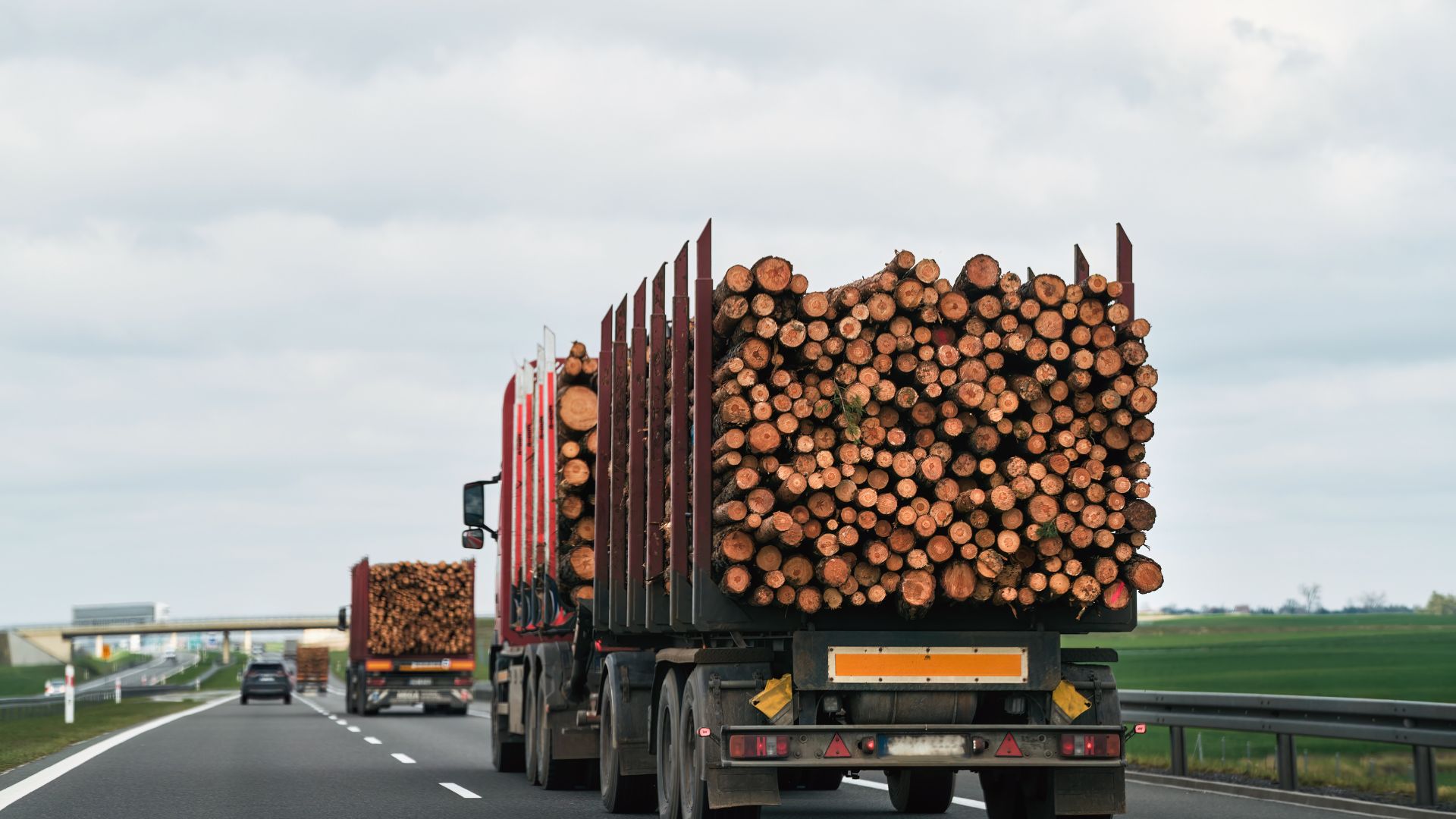
A loaded log truck is one of the hardest vehicles on the road to stop and one of the easiest to lose cargo from. When a binder snaps, a stake gives way, or a driver takes a curve too fast, logs weighing hundreds of pounds each can roll into traffic. People in the other car rarely walk away unhurt.
Phillips Law Offices has represented injured people and grieving families across Illinois since 1945, and has recovered over $500 million for clients. We handle logging truck cases from the investigation through trial, and you pay no fee unless we recover compensation for you.
Where Logging Truck Crashes Happen in Illinois
Most timber in Illinois comes out of the southern part of the state, including land in and around the Shawnee National Forest. From there, log trucks run to sawmills and shipping points on two-lane state routes and on interstates such as I-57 and I-64. Those routes mix slow, heavy trucks with fast passenger traffic, narrow shoulders, and hills, which is where many of these crashes start.
Log trucks also pass through the Chicago area, carrying timber and wood products to mills, rail yards, and distribution centers. Wherever the crash happened in Illinois, our attorneys can review your case.
Why Logging Trucks Cause Such Serious Crashes
Shifting and falling logs
Logs are round, heavy, and can be slick with bark, ice, or rain. If the load is not packed tightly and tied down, it can shift on a turn or slide off during a hard stop.
Rollovers
A tall load of logs raises the center of gravity. Taking a curve or ramp too fast can tip the whole rig, spilling the load across several lanes.
Long stopping distances
A fully loaded tractor-trailer can weigh up to 80,000 pounds on Illinois highways. At that weight, a truck needs far more road to stop than a car, so following too closely or speeding is deadly.
Driver fatigue
Log haulers often start before dawn and run long days to meet mill schedules. Federal hours-of-service rules cap most truck drivers at 11 hours of driving within a 14-hour on-duty window (49 CFR 395.3).
Poor maintenance
Worn brakes, bald tires, cracked stakes, and frayed tiedowns all raise the risk of a crash. Logging equipment works in mud and on rough roads, which wears parts out faster.
The Federal Rules for Securing Logs
Federal law has a section written just for log loads, 49 CFR 393.116. It sits on top of the general cargo securement rules that apply to every commercial truck. Among other things, it requires that:
- Logs be carried on a vehicle designed, built, or adapted for hauling logs, with bunks, bolsters, stakes, or standards that can handle the forces of the trip.
- Each outside log on the side of a stack touch at least two stakes, bunks, bolsters, or standards.
- Shortwood loaded crosswise be held by at least two tiedowns, placed at about one-third and two-thirds of the length of the logs.
- Longwood loaded lengthwise be held by at least two tiedowns, or by at least two wire-rope wrappers.
- Logs loaded crosswise not extend more than one-third of their length past the nearest supporting structure.
When a load shifts or falls, our first question is which of these rules was broken. The answer often points straight to the driver, the loader, or the carrier.
Who Can Be Held Responsible
A logging truck crash usually involves more than one company. Depending on the facts, responsibility may fall on:
- The driver, for speeding, fatigue, distraction, or unsafe turns
- The trucking company or carrier, for poor hiring, training, supervision, or pushing drivers past legal hours
- The logging company or loading crew, for loading or securing the logs badly
- The truck or trailer owner, for failing to maintain brakes, tires, stakes, and tiedowns
- A manufacturer, if a defective stake, binder, or truck part failed
Finding every responsible party matters because each may carry its own insurance, and commercial truck policies are often far larger than ordinary auto coverage.
Evidence That Wins Logging Truck Cases
Much of the proof in a truck case belongs to the trucking company, and some of it can be overwritten or thrown away within weeks. We move quickly to send a written demand that the company preserve:
- Electronic logging device (ELD) data showing driving hours and rest breaks
- Engine and GPS data on speed and braking
- Pre-trip and post-trip inspection reports and maintenance records
- Load and scale tickets, and photos of how the logs were secured
- Driver qualification files, drug and alcohol test results, and dispatch messages
- Dash camera footage from the truck
We also work with accident reconstruction and cargo securement experts to show exactly how the load failed.
Illinois Law You Should Know
Filing deadline: In most cases you have two years from the date of the crash to file a personal injury lawsuit (735 ILCS 5/13-202). A wrongful death action generally must be filed within two years of the death (740 ILCS 180/2). Some cases have shorter deadlines, so talk to a lawyer early.
Shared fault: Illinois follows modified comparative negligence (735 ILCS 5/2-1116). You can recover damages as long as you were not more than 50% at fault, and your award is reduced by your share of fault.
Damages: Injured people can seek medical costs, lost income, pain and suffering, disfigurement, and loss of normal life. Families who lost someone may bring wrongful death and survival claims.
Our Trucking Case Results
A sample of trucking cases our firm has resolved for injured people and families.
$5 Million
Settlement for the spouse of a 53-year-old truck driver who died after a collision with the defendants’ truck. The case was tried before a jury and settled after closing argument.
$1.5 Million
Settlement for the death of a man killed by the negligence of another truck driver.
Past results do not guarantee future outcomes. Every case is different. See more on our verdicts and settlements page.
What to Do After a Logging Truck Crash
- Get medical care right away. Crush injuries, head injuries, and internal bleeding can be worse than they first look.
- Call the police so there is an official crash report.
- Take photos of the truck, its DOT number and company name, the load, any fallen logs, the vehicles, and the road.
- Get witness names and phone numbers.
- Do not give a recorded statement to the trucking company’s insurer before you talk to a lawyer.
- Call a truck accident attorney quickly, before key evidence is lost.
Frequently Asked Questions
How long do I have to file a logging truck accident claim in Illinois?
In most cases you have two years from the date of the crash to file a personal injury lawsuit (735 ILCS 5/13-202). A wrongful death action generally must be filed within two years of the death. Some claims have shorter deadlines, so speak with a lawyer as soon as you can.
What are the federal rules for securing a load of logs?
Federal rule 49 CFR 393.116 requires logs to be carried on a vehicle built or adapted for logs, with each outside log touching at least two stakes or standards, and with set minimum numbers of tiedowns depending on how the logs are loaded.
Who pays if logs fall off a truck and hit my car?
Depending on the facts, the driver, the trucking company, the logging company or loading crew, the truck owner, or a parts manufacturer may be responsible. Each may have its own insurance.
Can I still recover if I was partly at fault?
Yes, as long as you were not more than 50% at fault. Illinois reduces your compensation by your percentage of fault (735 ILCS 5/2-1116).
How much does it cost to hire Phillips Law Offices?
Nothing up front. We work on a contingency fee, so you pay no attorney fee unless we recover compensation for you, and the first consultation is free.
Talk to a Logging Truck Accident Lawyer Today
Free, confidential case review. No fee unless we win.
(312) 346-4262
Related: Truck Accident Lawyer | Why Trucking Accidents Are More Complicated | Wrongful Death Lawyer | Complete Guide to PI Claims in Illinois | Verdicts and Settlements | Stephen D. Phillips
This page is for general information only and is not legal advice. Every case is different. Contact Phillips Law Offices for a free consultation about your logging truck accident.