
Updated November 17, 2026.
After a car accident, emergency doctors usually start with a physical exam and then order tests based on your symptoms and how the crash happened. The most common are X-rays for broken bones, CT scans for head, chest, abdominal and spine injuries, and blood and urine tests. An MRI is often ordered later if pain in the neck, back or a joint continues, because it shows soft tissue such as discs, ligaments and nerves that X-rays and CT scans can miss. These tests matter for your health, and their results also become the core evidence of an injury claim.
Common tests after a crash
Physical and neurological exam. The doctor checks vital signs, tenderness, range of motion, strength, reflexes and sensation, and screens for concussion with questions about memory and orientation.
X-rays. Fast and widely available, X-rays show fractures and dislocations, such as broken ribs, wrists or collarbones.
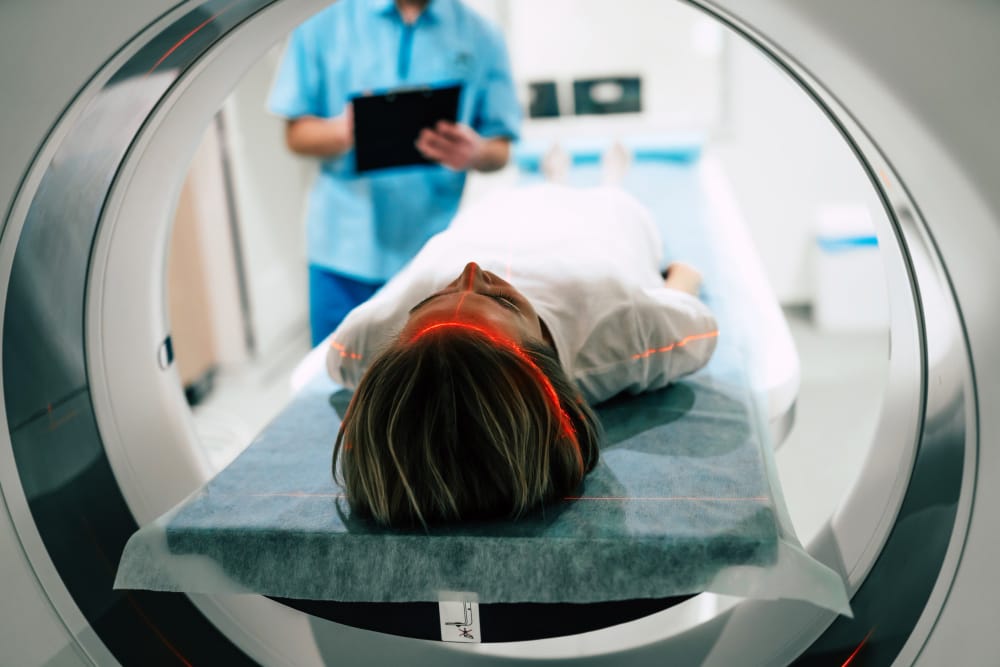
CT scan. A CT combines many X-ray images into detailed cross-sections. It is the main test for suspected bleeding in the brain, skull and facial fractures, spine fractures, and injuries to the chest and abdomen such as a damaged spleen or liver. The National Institute of Biomedical Imaging and Bioengineering explains how CT works.
MRI. Better than CT for soft tissue, an MRI can show herniated discs, ligament and tendon tears, spinal cord injury and some brain injuries. It is usually done days or weeks later when symptoms persist, rather than in the emergency room. See our post on whether you should get an MRI after a car accident.
Ultrasound. In trauma care, a quick bedside ultrasound called a FAST exam checks for internal bleeding in the abdomen and around the heart.
Blood and urine tests. These check for blood loss, organ damage and kidney injury. Hospitals may also test for alcohol and drugs, which we discuss in whether hospitals drug test after car accidents.
Follow-up tests. For lasting symptoms, doctors may order nerve conduction studies or EMG for numbness and weakness, or neuropsychological testing for memory and concentration problems after a head injury.
Why a normal first test does not mean you are fine
Many injuries do not show up on an X-ray or even a CT. Concussions often leave no visible sign on imaging. Soft tissue injuries and herniated discs may need an MRI. Symptoms such as headaches, dizziness, neck pain or numbness can also appear hours or days later. If symptoms start or get worse, go back to a doctor. Our post on delayed symptoms after an accident covers the most common ones, and symptoms of head trauma lists warning signs that need emergency care.
How medical tests affect an injury claim
Insurance companies rely on objective evidence. An X-ray showing a fracture or an MRI showing a herniated disc connected to the crash is far more persuasive than a description of pain alone. Tests also create a timeline: an exam soon after the crash links the injury to it, while a long gap invites the argument that something else caused it.
Tell every doctor that you were in a car accident and describe your symptoms fully. Keep copies of imaging reports and test results, and follow through on recommended tests and referrals. In Illinois, the at-fault driver’s insurer is ultimately responsible for reasonable medical costs, though your own health insurance usually pays first, as explained in our post on who pays medical bills after a car accident.
Most Illinois car accident injury claims must be filed within two years of the crash.
Talk to a Chicago car accident lawyer
Phillips Law Offices represents people injured in car accidents across Chicago and Illinois. We gather your medical records and imaging and work with your doctors to show the full extent of your injuries. The consultation is free, and you pay no fee unless we recover compensation for you.
Call (312) 346-4262 or book a free consultation online.
Frequently asked questions
What tests do hospitals do after a car accident?
Usually a physical exam, X-rays for fractures, CT scans for head, chest, abdominal and spine injuries, a bedside ultrasound to check for internal bleeding, and blood and urine tests. An MRI is often ordered later for persistent soft tissue symptoms.
Should I get an MRI after a car accident?
If neck, back or joint pain, numbness or weakness continues after the first visit, ask your doctor. An MRI shows discs, ligaments, tendons and nerves that X-rays and CT scans can miss.
Can a concussion show up on a CT scan?
Often not. A CT scan looks for bleeding and fractures, but many concussions leave no visible sign. Diagnosis is usually based on symptoms and a neurological exam.
Why do test results matter for my injury claim?
Objective findings such as fractures or disc herniations, recorded soon after the crash, help prove that your injuries were caused by the accident and how serious they are.