
Ringing in your ears after a crash isn’t just an annoyance, it can be a real, medically documented injury called tinnitus, and settlements for it generally range from $50,000 to $250,000 depending on severity. You don’t necessarily need to have hit your head to develop it; whiplash, airbag noise, and nerve damage can all cause it on their own.
How a Car Accident Causes Tinnitus
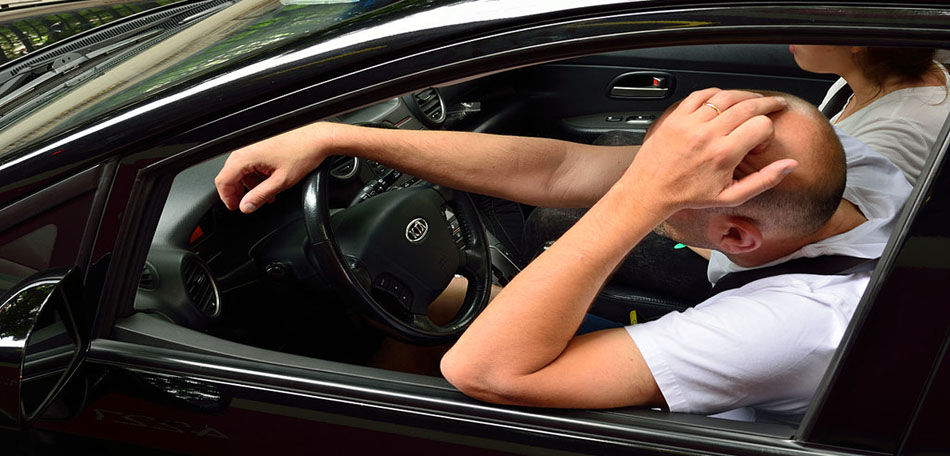
Tinnitus, the perception of ringing, buzzing, or humming in the ears with no external sound source, can result from several different mechanisms in a car accident, and more than one often applies in the same crash. Direct head trauma, striking the window, steering wheel, or headrest, can damage the inner ear or the auditory nerve directly. Whiplash, the rapid back-and-forth motion of the neck, can also cause tinnitus without any head impact at all, since the same forceful motion that strains the neck can also affect delicate nerve pathways connected to the hearing system. Airbag deployment is a less obvious cause: airbags can generate a sudden burst of noise exceeding 170 decibels upon deployment, loud enough to cause genuine acoustic trauma to the delicate structures of the inner ear even when the airbag itself performs exactly as designed and successfully prevents a far more serious injury.
Why This Supports a Real Injury Claim
Tinnitus is a recognized medical condition, not a vague complaint, and a crash-related diagnosis can support a personal injury claim the same way a fracture or soft-tissue injury would, provided you can connect it to the collision. The claim still requires the same two elements as any other injury claim: that the other party’s negligence caused the crash, and that the crash caused your tinnitus. Because tinnitus has no visible external sign the way a cast or a scar does, it’s often one of the injuries insurers scrutinize most closely and skeptically, which makes prompt, specific medical documentation unusually important in these particular cases.
What Affects the Value of a Tinnitus Claim
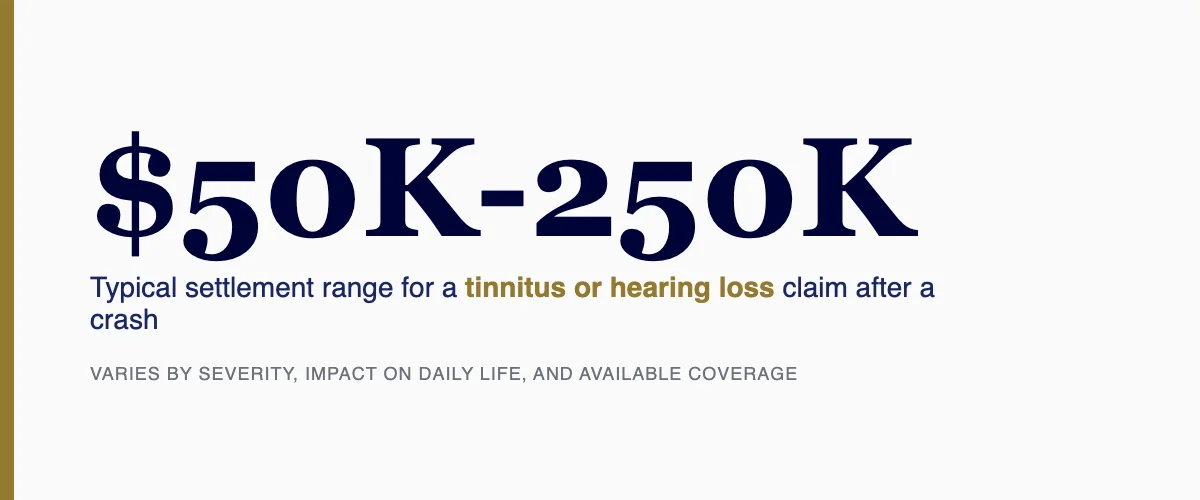
Several factors drive where a case falls within the typical $50,000 to $250,000 range. Whether the tinnitus is permanent or expected to resolve matters significantly, a condition likely to last a lifetime supports much higher damages than one your doctor expects to improve within months. How much it actually disrupts your life, sleep, concentration, ability to work in a quiet environment, or simply enjoy daily activities, is a real component of pain and suffering damages. Whether the tinnitus is connected to a more serious underlying injury, particularly a traumatic brain injury or significant whiplash, tends to push settlements toward the higher end of that range, since it then reflects part of a broader, more serious injury picture rather than standing alone as an isolated symptom.
Proving Causation: Why Timing and Documentation Matter
The single biggest challenge in a tinnitus claim is almost always causation, connecting the ringing specifically to the crash rather than to some unrelated cause. This is why reporting the symptom promptly matters more here than in injuries with obvious physical signs: a gap of weeks or months between the crash and your first mention of ringing in your ears gives an insurer a straightforward, easy argument that something else entirely caused it. An evaluation by an audiologist or ear, nose, and throat specialist (ENT), ideally soon after the crash rather than weeks or months later, creates the kind of contemporaneous medical record that directly supports your claim, documenting both the condition itself and, where possible, a professional opinion connecting it to the specific trauma you experienced in the collision.
What If You Had Some Hearing Issues Before the Crash?
Insurers frequently raise any prior hearing issues, age-related hearing loss, a past ear infection, occasional ringing before the crash, as a reason to try to deny or significantly minimize a tinnitus claim entirely. Illinois law doesn’t require a pre-accident clean slate to recover: it allows compensation for the aggravation of a pre-existing condition, meaning if the crash made an existing, mild issue significantly worse, you can recover for that aggravation even though you weren’t starting from perfect hearing. The key is clear medical evidence distinguishing your condition before the crash from your condition after it, which is yet another reason prompt evaluation matters so much, it establishes a documented “before” baseline against which the crash’s actual, measurable impact can later be compared.
How This Fits Into Your Broader Injury Claim
Tinnitus rarely appears as the only injury in a crash claim; it’s usually one component alongside whiplash, head trauma, or other injuries from the same collision. Our guide on evidence you need after a car crash covers the broader documentation that supports any injury claim, and the same principles, prompt medical treatment, consistent follow-up, and a clear written record of your symptoms, apply directly to tinnitus as well. If your case involves comparative fault questions, our guide on Illinois’ comparative negligence law explains how your own percentage of fault, if any, affects what you can recover.
Subjective vs. Objective Tinnitus
Most crash-related tinnitus is “subjective,” meaning only you can hear it, there’s no external sound a doctor can detect with equipment, which is exactly why medical documentation and your own consistent reporting matter so much. A smaller number of cases involve “objective” tinnitus, caused by actual physical sounds within the body, such as blood flow near the ear following a vascular injury, which a physician can sometimes detect directly. Objective tinnitus is considerably rarer but easier to verify medically through direct examination; subjective tinnitus is far more common after a car crash and depends more heavily on your own symptom history, its consistency over time, and the overall credibility of your reporting to medical providers.
A Worked Example
Consider a rear-end collision where the airbag deploys and the driver’s neck is jolted forward and back in classic whiplash fashion. In the immediate aftermath, the driver is focused on more visible injuries, a bruised chest from the seatbelt, neck stiffness, and doesn’t mention a faint ringing in their ears during the ER visit. Two weeks later, the ringing hasn’t gone away and is now interfering with sleep. Here, the delay in reporting isn’t fatal to a claim, but it does make the medical record less clean than it would have been with same-day reporting. An ENT evaluation at this later point, careful documentation tying the symptom’s onset to “shortly after the accident” based on the patient’s own consistent and credible history, and a medical process of ruling out other plausible causes, can still build a solid causation case, though earlier same-day reporting would have made that case considerably stronger from the start.
Treatment and Why It Matters for Your Claim
Tinnitus treatment typically includes an audiological evaluation to establish a baseline, sound therapy or white-noise devices to help manage the perception of the ringing, and in some cases, hearing aids if accompanying permanent hearing loss is also present alongside the ringing. Cognitive behavioral therapy and formal tinnitus retraining therapy are sometimes used for more severe cases where the condition significantly affects mental health, concentration, or day-to-day functioning. Beyond the direct medical benefit, consistent engagement with this treatment also matters for your legal claim: a documented, ongoing treatment history supports both the severity of your condition and the overall credibility of your reported symptoms, while unexplained gaps in treatment can be, and often are, used by an insurer to argue the condition wasn’t as serious as you’ve claimed it to be.
Impact on Work and Daily Life
Tinnitus’s effect on damages often comes down to how it actually disrupts a person’s life, not just the diagnosis itself. For someone whose work requires sustained concentration in quiet settings, teaching, detailed desk work, or jobs requiring precise listening or communication, persistent ringing can meaningfully impair their day-to-day job performance. Sleep disruption is extremely common with tinnitus, since the condition is often most noticeable in quiet environments at night, and chronic sleep loss can compound into broader impacts on mood, concentration, and overall quality of life. Documenting these specific, personal impacts in detail, not just the bare medical diagnosis on a chart, is often what separates a modest settlement from one that actually reflects the condition’s true, lasting effect on your life.
Frequently Asked Questions
Can a car accident really cause tinnitus?
Yes. Tinnitus after a car accident is common and can result from head trauma, whiplash-related neck injury, acoustic trauma from loud airbag deployment (which can exceed 170 decibels), or nerve damage, even without a direct blow to the head.
What is the average settlement for tinnitus after a car accident?
Settlement amounts for tinnitus and hearing loss claims generally range from about $50,000 to $250,000, depending on severity, whether it’s permanent, how much it affects daily life, available insurance coverage, and whether it’s connected to a more serious injury like traumatic brain injury.
How do you prove tinnitus was caused by a car accident?
Through prompt medical documentation connecting your symptoms to the crash, an audiologist or ENT evaluation, and a clear timeline showing the tinnitus began at or shortly after the collision, not from an unrelated, pre-existing cause.
Can I still recover if I had some hearing issues before the accident?
Yes. Illinois law allows recovery for the aggravation of a pre-existing condition, even if you had mild or occasional tinnitus before the crash. You can be compensated for the extent to which the accident made your condition worse, not just for a brand-new injury.
Is tinnitus considered a permanent injury?
It depends on the case. Tinnitus can resolve within weeks or months, or it can become a permanent, lifelong condition. Whether it’s classified as permanent significantly affects the value of a claim, since permanent tinnitus supports damages for the ongoing impact on your quality of life, not just short-term treatment costs.
What to Do If You Notice Ringing After a Crash
Mention it to a medical provider as soon as you notice it, even if it seems minor compared to other injuries, and even if it’s at a follow-up appointment rather than the initial ER visit. Ask specifically to be referred to an audiologist or ENT specialist rather than assuming a general practitioner’s standard exam adequately covers it, hearing-specific evaluation requires specialized diagnostic equipment and expertise that a routine general physical exam simply doesn’t provide. Keep a simple, ongoing log of when the ringing feels worse, what seems to trigger or worsen it, and specifically how it’s affecting your sleep, your work, or your everyday activities, this kind of contemporaneous record, created in real time as you actually experience it rather than reconstructed from memory much later, carries real weight in supporting both the medical diagnosis and the damages portion of your overall claim.
A Note on Veterans and Prior Military Service
If you’re a veteran, be aware that pre-existing service-connected hearing damage or tinnitus, common given the significant noise exposure inherent to many forms of military service, doesn’t prevent you from recovering for a genuinely new aggravation caused separately by a car accident. The same aggravation-of-a-pre-existing-condition principle applies: a crash that measurably worsened service-related hearing damage can still support a claim for that specific worsening, evaluated carefully against your documented medical baseline from before the collision ever occurred.
Why Insurers Push Back Hard on Tinnitus Claims
Because tinnitus can’t be captured on an X-ray or MRI the way a fracture can, and because it relies heavily on the patient’s own subjective reporting, insurers often treat these claims with particular skepticism, sometimes suggesting the injury is exaggerated or entirely unrelated to the crash. This is understandably frustrating for genuinely injured claimants, but it’s also a predictable, standard insurance-industry tactic rather than any real reflection of your claim’s actual underlying merit. Thorough, consistent medical documentation, created at the time your symptoms actually occurred rather than assembled after the fact once a claim is already underway, is the most effective practical answer to this kind of skepticism.