

Medically, you should see a doctor the same day as a car accident or within a day or two, even if you feel fine. Legally, Illinois has no rule that says you must see a doctor within a set number of days to have a claim. But every day you wait gives the other driver’s insurance company something to argue about, and a long gap can shrink or sink a claim. If it has already been days or weeks, it is not too late to go. Go now, and tell the doctor about the crash.
Why injuries often show up later
Many people walk away from a crash feeling shaken but not hurt, then wake up a day or two later with a stiff neck or a pounding headache. The stress of a collision can mask pain for a while, and some injuries take time to develop.
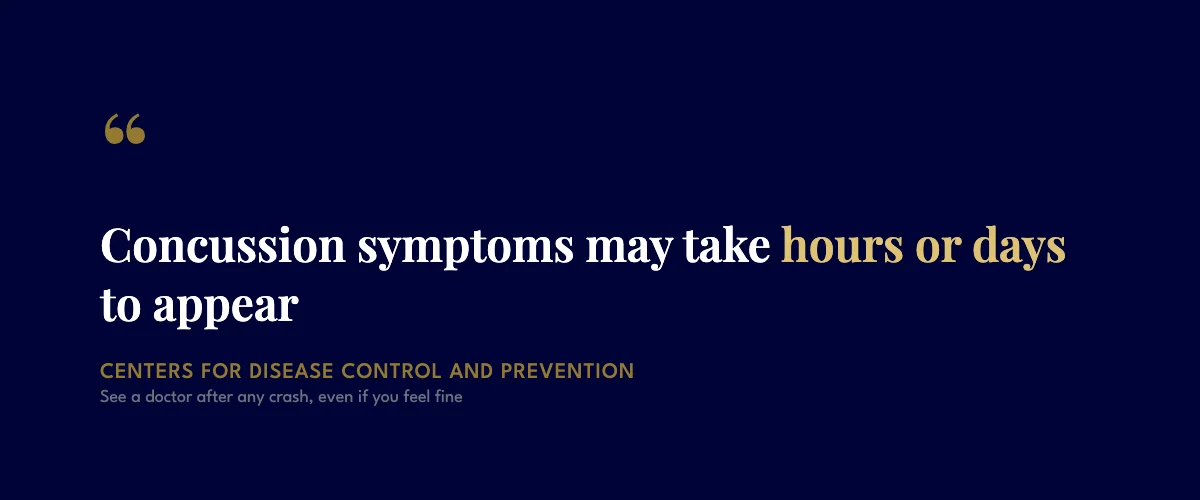
The CDC says concussion symptoms may not show up right away and can take hours or days to appear or be noticed. Mayo Clinic notes that whiplash symptoms most often start within days of the injury. Internal injuries and some fractures can also be missed without an exam or imaging. Our post on delayed symptoms after an accident covers the common ones.
What insurance companies do with a delay
An adjuster reviewing your claim will look first at when you first got medical care. A gap between the crash and your first visit, or long breaks in treatment after that, leads to a few predictable arguments.
It was not the crash. If you first saw a doctor three weeks later, the insurer will suggest the pain came from something else in those three weeks, such as work or a fall at home.
It was not serious. Insurers argue that a person who was really hurt would have gone to a doctor right away, and they use the gap to justify a low offer.
You made it worse. Illinois law expects an injured person to use reasonable care to limit their own damages. If delaying treatment allowed an injury to get worse, the defense can argue that part of the harm should not be charged to the other driver.
None of these arguments is automatically right. A doctor can explain why symptoms appeared late, and many juries understand that people try to tough it out. But it is much easier to win a claim that never has to answer them.
If you already waited
Go now. A late first visit is far better than no visit, and an injury that is never documented is very hard to recover for.
Tell the doctor plainly that you were in a car accident and when each symptom started. That history goes into your records and links the injury to the crash in the doctor’s own words. Be specific. “My neck started hurting the morning after the accident and has gotten worse” is far more useful than “my neck hurts.”
If there was a reason you waited, such as having no insurance or symptoms that seemed minor at first, it is fine to say so. Honest reasons are common, and a lawyer can work with them.
After that first visit, follow the treatment plan. Gaps in the middle of treatment, such as skipped physical therapy sessions, draw the same arguments as a late first visit. If you have to stop or change treatment, tell your doctor so the reason is in your chart.
When to go to the emergency room
Some symptoms after a crash need emergency care right away. The CDC lists danger signs after a head injury that include a headache that gets worse and does not go away, repeated vomiting, slurred speech, unusual confusion, seizures, and one pupil larger than the other. Severe abdominal pain, chest pain, trouble breathing, and numbness or weakness in the arms or legs also need immediate attention. Call 911 rather than waiting to see if they pass. Our page on symptoms of blunt force head trauma covers head injury warning signs in more detail.
Cost should not be the reason you wait
Many people put off a doctor because they are worried about the bill. Illinois is an at-fault state, so the at-fault driver’s insurer is ultimately responsible for your crash-related medical bills, but it usually does not pay as you go. In the meantime, your own health insurance or the medical payments coverage on your auto policy can cover care, and those bills become part of your claim.
If a doctor or hospital places a lien on your case, Illinois limits how much of a settlement or verdict health care liens can take in total under the Health Care Services Lien Act, 770 ILCS 23. Our guide to medical bills after a car accident explains how this usually works.
The legal deadlines are separate
Seeing a doctor late does not change the deadline to file a lawsuit. In Illinois, most car accident injury claims must be filed within two years of the crash (735 ILCS 5/13-202). Claims against a local government usually have a one-year deadline, and your own auto policy may require prompt notice of an accident. Our post on the car accident statute of limitations in Illinois has the details.
If the crash aggravated an injury you already had, that can still be part of the claim. See our post on a pre-existing injury aggravated in a car accident.
Talk to a Chicago car accident lawyer
If you were hurt in a crash and waited to get care, a lawyer can help you build the medical record properly and answer the insurer’s gap-in-treatment arguments before they cost you. Phillips Law Offices handles car accident cases across Chicago and Illinois. The consultation is free, and you pay no fee unless we recover compensation for you.
Call (312) 346-4262 or book a free consultation online. For the full checklist after a crash, read what to do after a car accident in Illinois.
Frequently asked questions
How long after a car accident can you see a doctor?
Illinois law sets no deadline for seeing a doctor after a crash, but you should go the same day or within a day or two. The longer you wait, the easier it is for an insurance company to argue that your injury came from something else or was not serious.
Is it too late to see a doctor a week after a car accident?
No. Go now and tell the doctor about the crash and when your symptoms started. A late visit is much better than none, and a doctor can explain why symptoms like whiplash or concussion often appear after a delay.
Can I still get compensation if I did not go to the hospital right away?
Often, yes. Many people with real injuries do not go to the hospital on the day of the crash. The key is getting care as soon as you notice symptoms and having your records connect the injury to the accident.
What is a gap in treatment?
It is any long period without medical care, either between the crash and your first visit or in the middle of treatment. Insurance companies use gaps to argue an injury was not caused by the crash or was not serious, so follow your treatment plan and tell your doctor if you need to stop.
Does a late doctor visit change the deadline to file a lawsuit?
No. In Illinois, most car accident injury claims must still be filed within two years of the crash, and claims against a local government usually within one year.