
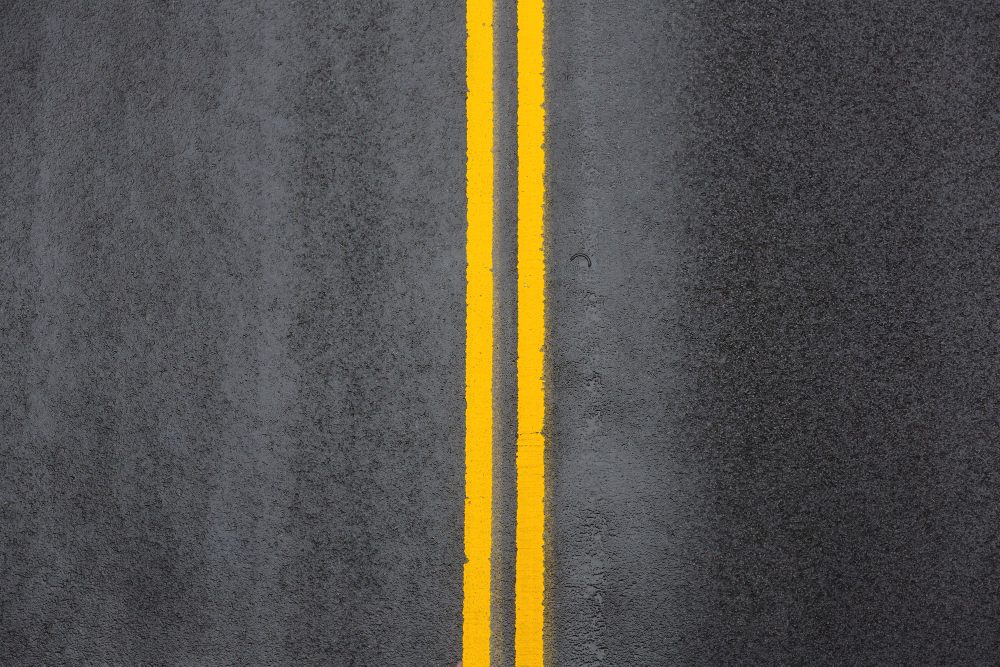
A double solid yellow line means you cannot pass or cross into oncoming traffic under Illinois law (625 ILCS 5/11-303). These two parallel yellow lines separate opposing traffic lanes and indicate that passing in either direction is prohibited. Crossing a double yellow line is illegal except when turning into a driveway, alley, or private road—and only if done safely without impeding traffic.
Illinois Road Marking Rules: Complete Guide (2026)
| Road Marking | Meaning | Can You Cross? | Illinois Statute |
|---|---|---|---|
| Double Solid Yellow | No passing zone for both directions | NO (except for driveways/turns) | 625 ILCS 5/11-303 |
| Single Solid Yellow | No passing from your side | NO from your lane | 625 ILCS 5/11-303 |
| Broken Yellow + Solid Yellow | Passing allowed on broken side only | YES from broken side only | 625 ILCS 5/11-303 |
| Single Broken Yellow | Passing allowed when safe | YES when safe | 625 ILCS 5/11-303 |
| Double Solid White | Lane barrier, do not cross | NO | 625 ILCS 5/11-709 |
| Single Solid White | Discouraged lane change | Discouraged but legal | 625 ILCS 5/11-709 |
| Broken White | Same-direction lane separation | YES when safe | 625 ILCS 5/11-709 |
Illinois Penalties for Crossing Double Yellow Lines (2026)
Illegally crossing a double solid yellow line in Illinois carries significant penalties under 625 ILCS 5/11-303 and 625 ILCS 5/11-708:
| Violation | Fine Range | Points on License | Additional Consequences |
|---|---|---|---|
| Improper passing over double yellow | $120 – $500 | 20 points | Traffic school may be required |
| Crossing double yellow to pass (no accident) | $120 – $500 | 20 points | Insurance rate increase 15-25% |
| Crossing double yellow resulting in accident | $500 – $2,500 | 20-55 points | License suspension possible |
| Crossing double yellow with injury accident | $1,000 – $25,000 | 55+ points | Criminal charges possible (reckless driving) |
| Crossing double yellow with fatality | $5,000+ | License revocation | Felony charges possible |
When Can You Legally Cross a Double Yellow Line in Illinois?
Under Illinois law, there are limited exceptions allowing drivers to cross double solid yellow lines:
Legal Exceptions
- Turning left into a driveway, alley, or private road – You must yield to oncoming traffic and cross only when safe
- Turning left at an intersection – Where left turns are permitted by traffic signals or signs
- Making a legal U-turn – Only where U-turns are allowed and you can complete it safely
- Obeying a police officer or flagman – When directed by law enforcement or construction crews
- Avoiding an obstacle in the road – Emergency situations only, when no other option exists
Always Illegal (No Exceptions)
- Passing another vehicle over double yellow lines
- Racing or reckless driving across centerlines
- Crossing to bypass traffic congestion
- Crossing in a no-passing zone on curves or hills
Why Double Solid Yellow Lines Exist: Head-On Collision Prevention
Double solid yellow lines are placed in high-risk areas where head-on collisions are most likely:
| Location Type | Why Double Yellow Lines Are Used | Common Crash Causes |
|---|---|---|
| Curves and bends | Limited visibility of oncoming traffic | Cutting corners, misjudging curve |
| Hills and crests | Cannot see over hill | Passing attempt, speeding |
| Narrow two-lane roads | No room for safe passing | Impatient passing, distraction |
| Near intersections | Conflicting turning traffic | Improper left turns |
| School zones | Pedestrian safety priority | Distracted driving |
| Construction zones | Changed road conditions | Confusion, lane shifts |
Illinois Head-On Collision Statistics
According to the Illinois Secretary of State and IDOT crash data:
- Head-on collisions account for only 2% of all crashes but 11% of all traffic fatalities
- Over 75% of fatal head-on collisions involve crossing the centerline
- Double yellow line violations are a factor in 3,200+ crashes annually in Illinois
- The average head-on collision settlement in Illinois: $150,000 – $500,000+
Fault Determination in Double Yellow Line Accidents
If you’re in a car accident involving a double yellow line violation, fault is typically clear:
| Scenario | Who Is At Fault? | Fault Percentage | Legal Basis |
|---|---|---|---|
| Driver crosses double yellow to pass, hits oncoming car | Crossing driver | 100% | Negligence per se (statutory violation) |
| Driver crosses to turn left, hits oncoming motorcycle | Turning driver | Usually 100% | Failure to yield right-of-way |
| Both drivers partially in wrong lane | Shared fault | Varies (50/50 possible) | Comparative negligence |
| Driver avoids obstacle, crosses yellow, hits oncoming car | Usually crossing driver | 70-100% | Emergency doctrine may reduce fault |
| Drunk driver crosses double yellow | Drunk driver | 100% | DUI + traffic violation |
Injuries Common in Double Yellow Line Accidents
Head-on collisions from crossing double yellow lines cause the most severe injuries because of the combined closing speed (e.g., two cars at 45 mph = 90 mph impact). Common injuries include:
- Traumatic brain injuries (TBI) – From head striking steering wheel, dashboard, or airbag
- Spinal cord injuries – Compression fractures, herniated discs, paralysis
- Broken bones – Legs, arms, ribs, pelvis from impact forces
- Internal organ damage – Spleen, liver, kidney trauma
- Chest injuries – Steering wheel impact, seatbelt injuries
- Facial injuries – Airbag burns, glass lacerations
- Wrongful death – Head-on collisions have highest fatality rate of any crash type
Understanding All Road Line Markings in Illinois
Yellow Lines (Separate Opposite-Direction Traffic)
- Double solid yellow: No passing either direction
- Solid yellow with broken yellow: Only broken-side can pass
- Single broken yellow: Passing allowed when safe
White Lines (Separate Same-Direction Traffic)
- Double solid white: Do not cross (HOV lanes, toll plazas)
- Single solid white: Lane change discouraged (near exits, intersections)
- Broken white: Lane change permitted when safe
Other Important Road Markings
- Edge lines (white): Mark the outer edge of the roadway
- Crosswalk lines: Pedestrian crossing areas
- Stop lines: Where to stop at intersections
- Yield lines: Triangular markings where you must yield
Frequently Asked Questions About Double Yellow Lines
Can you turn left across a double yellow line in Illinois?
Yes, you can turn left across a double yellow line in Illinois when entering a driveway, alley, or private road—but only if it’s safe to do so. You must yield to all oncoming traffic before crossing. You cannot cross double yellow lines to pass another vehicle.
What is the fine for crossing a double yellow line in Illinois?
The fine for illegally crossing a double yellow line in Illinois ranges from $120 to $500, plus 20 points on your driving record. If the violation causes an accident with injuries, fines can exceed $2,500 and criminal charges may apply.
Is it ever legal to pass on a double yellow line?
No. In Illinois, it is never legal to pass another vehicle by crossing a double solid yellow line. These markings specifically indicate no-passing zones where passing would be dangerous due to limited visibility or road conditions.
What’s the difference between single and double yellow lines?
A single solid yellow line means no passing from your direction only (the other direction may pass). A double solid yellow line means no passing from either direction. A broken yellow line means passing is permitted when safe.
Who is at fault if someone crosses a double yellow and hits me?
The driver who crossed the double yellow line is typically 100% at fault. Crossing a double yellow line is a traffic violation, and causing an accident while violating traffic law creates “negligence per se”—automatic liability. You can pursue compensation for all your damages.
Can I make a U-turn over a double yellow line?
Only where U-turns are specifically permitted by signs or signals. In most cases, you cannot make a U-turn by crossing a double yellow line, especially in business districts, near intersections, or where visibility is limited.
Injured by a Driver Who Crossed the Double Yellow Line?
If you or a loved one was injured in a head-on collision caused by a driver illegally crossing a double yellow line, you may be entitled to significant compensation. These crashes often result in catastrophic injuries including traumatic brain injuries, spinal cord damage, and wrongful death.
At Phillips Law Offices, our experienced Illinois car accident lawyers have recovered millions for victims of negligent drivers. We handle cases involving:
- Head-on collisions from illegal passing
- Wrong-way driver accidents
- Drunk drivers crossing centerlines
- Distracted drivers drifting into oncoming traffic
- Commercial truck and motorcycle accidents
Call (312) 346-4262 today for your free consultation. We’ll investigate the accident, gather evidence, and fight to get you maximum compensation for medical bills, lost wages, pain and suffering, and more.
Related Resources:
What Are the Rules of a Four-Way Stop in Illinois?
Violations of traffic laws, including crossing double yellow lines, are a leading cause of head-on collisions with large trucks on Illinois roads. If you were hit by a truck that crossed into your lane in the Kane County area, our truck collision lawyers in Kane County are ready to investigate and pursue your claim.
Truck drivers crossing center lines on McHenry County’s two-lane rural roads cause devastating head-on collisions. If you were hit by a truck in McHenry County, our McHenry County truck accident lawyers have the resources to investigate and hold the trucking company accountable.
Trucks crossing into oncoming traffic on roads near Palatine cause catastrophic accidents. If a truck driver violated traffic laws and hit you in the Palatine area, our Palatine truck accident lawyers can investigate the trucking company and pursue maximum compensation.
Trucks crossing center lines on Arlington Heights roads like Arlington Heights Road and Rand Road cause devastating head-on collisions. Our Arlington Heights truck accident lawyers have the experience to take on large trucking companies and their insurers.