
Last updated: July 2026
As a car accident law firm, we’ve seen firsthand how much a properly used car seat matters in a crash. According to the National Highway Traffic Safety Administration (NHTSA), correct car seat use reduces the risk of fatal injury by 71% for infants and 54% for toddlers.
Getting the right seat only matters if it’s actually installed correctly. NHTSA data shows 59% of car seats have at least one installation error. The most common mistakes: a harness left too loose, a chest clip in the wrong position, or straps that are twisted.
Which Seat for Which Age
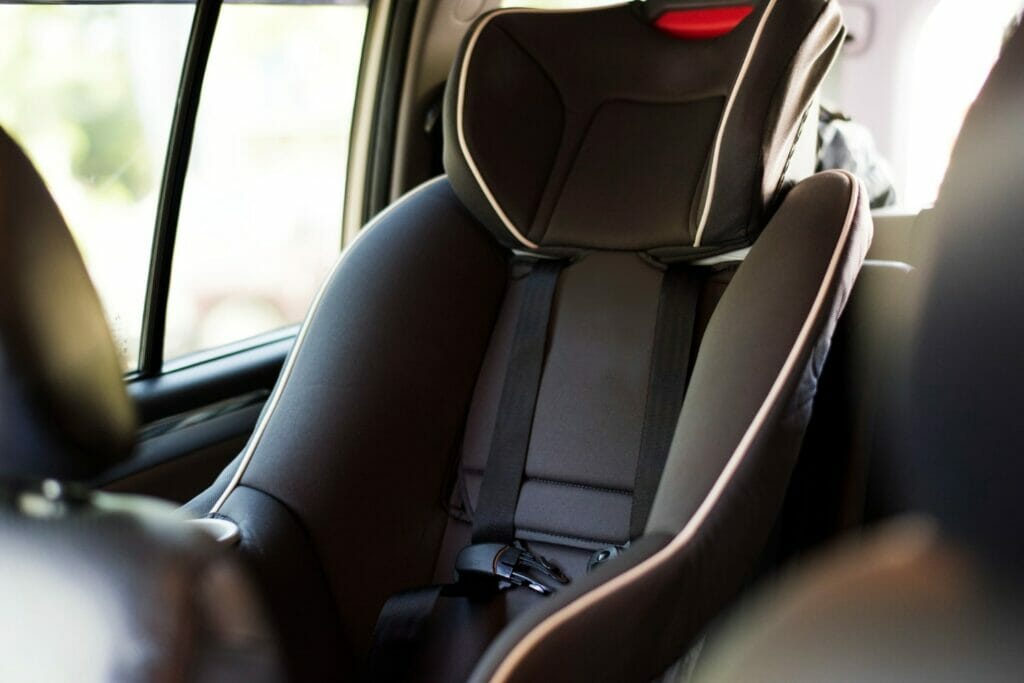
- Rear-facing infant seats, up to 35 pounds, placed rear-facing in the back seat.
- Forward-facing seats, roughly 20 to 65 pounds, placed forward-facing in the back seat.
- Booster seats, for children who’ve outgrown their forward-facing seat but aren’t yet big enough for the vehicle’s seat belt alone. The booster raises the child so the belt sits properly across the chest and hips, not the neck or stomach.
Illinois has its own specific requirements for child restraints by age and weight. See our full breakdown of child car seat standards in Illinois.
How Crash Type Affects a Restrained Child
- Rear-end collisions can cause whiplash injuries, even in a properly restrained child, if the impact is severe enough.
- Side-impact (T-bone) collisions are particularly dangerous for a child seated on the side that’s struck.
- Head-on collisions are among the most likely to cause serious or fatal injuries.
- Rollover accidents are especially dangerous for children who aren’t properly restrained.
If Your Child Was Injured
Even a correctly installed, age-appropriate seat can’t prevent every injury. If your child was hurt in a crash, Illinois law allows a claim for their medical costs, and compensation isn’t limited by anything you did or didn’t do with the car seat, provided it was properly used. See our guide on settlement value for a child injured in a car accident.
Frequently Asked Questions
How much does a car seat actually reduce injury risk?
NHTSA data shows correct car seat use reduces the risk of fatal injury by 71% for infants and 54% for toddlers compared to no restraint.
How common are car seat installation mistakes?
NHTSA found 59% of car seats have at least one installation error, most often a loose harness, a misplaced chest clip, or twisted straps.
When should a child move from a car seat to a booster seat?
Once they’ve outgrown the height or weight limit of their forward-facing car seat but are still too small for the vehicle’s seat belt to fit properly on its own.
Is compensation reduced if my child’s car seat wasn’t installed perfectly?
Not automatically. Fault in a car accident case centers on the driver who caused the crash, not on imperfect car seat installation, unless that specific issue is shown to have caused or worsened the injury.
Injured Child? Talk to Our Attorneys
The Illinois personal injury law firm of Phillips Law Offices has a recognized reputation as having aggressive, skilled, and determined representatives and advocates for injured individuals and their families. If your child was injured in a car accident, our Chicago car accident lawyers can help you understand your legal options and pursue full compensation.
Read More:
Why Are Car Crash Fatalities More Common in the U.S. Than Other High-Income Countries?
Do I Have a Case Against the Manufacturer If My Airbags Didn’t Deploy?