
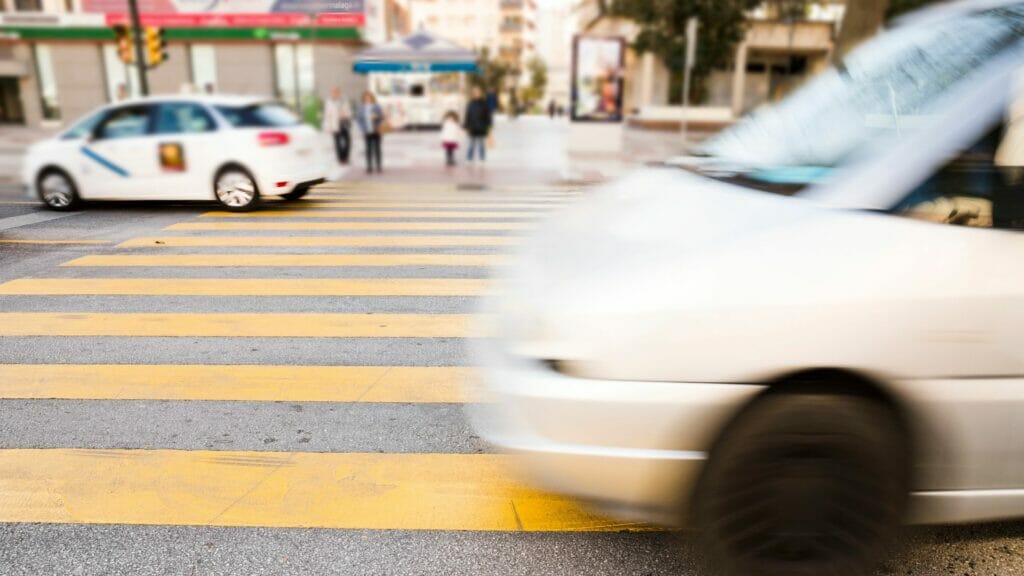
Chicago Speeding Accident Lawyer
Hit by a speeding driver on Chicago expressways, neighborhood streets, or suburban arterials? Phillips Law Offices has handled Chicago car-crash cases since 1945. Free consultation. No fee unless we win.
Speed kills. The math is unforgiving: kinetic energy rises with the square of velocity, so the same crash at 70 mph carries roughly twice the energy of a crash at 50 mph. On Chicago expressways and arterials, that difference is the line between a fender bender and a fatality. If you or someone you love was hit by a speeding driver anywhere in Chicago – on the Kennedy, the Dan Ryan, the Eisenhower, the Stevenson, I-57, the Edens, the Tri-State, on Lake Shore Drive, or on a neighborhood arterial like Western, Pulaski, Cicero, Halsted, or Ashland – the attorneys at Phillips Law Offices are ready to pull the data, lock down the evidence, and pursue every dollar the law allows. We have been doing this work since 1945.
Recognized for results in Illinois personal-injury law
Eight decades of trial work has put the firm and its lawyers on the lists that matter. A sample of the recognitions on file:
Super Lawyers
Personal Injury – Plaintiff
Million Dollar Advocates Forum
Member
Multi-Million Dollar Advocates Forum
Member
Best Lawyers in America
Personal Injury Litigation – Plaintiffs
AV Preeminent
Martindale-Hubbell peer rating
Illinois Trial Lawyers Association
Member in good standing
American Association for Justice
Member
Chicago Bar Association
Member
No aspect of these advertisements has been approved by the Supreme Court of Illinois. Past results do not guarantee future outcomes.
Where these crashes happen in Chicago and Cook County
Speeding crashes happen everywhere there is open pavement and a driver in a hurry. We see them constantly on the I-90/94 Kennedy and Dan Ryan corridor, on the I-290 Eisenhower coming out of the West Loop, on the I-55 Stevenson out to the southwest suburbs, on I-57 down toward Markham, on I-94 north (the Edens) and on I-294 (the Tri-State). Lake Shore Drive remains a chronic speeding corridor – the long straight runs between Hollywood and Hyde Park invite triple-digit cruising. Inside the city, speed shows up on Cicero, Pulaski, Western, Halsted, Archer, Stony Island, and on the entrance ramps where drivers floor it to merge into 70 mph traffic. In construction zones – the Eisenhower around Mannheim, the Kennedy through the Edens junction, the Stevenson at the Cicero/Pulaski overlaps – speeding is criminalized at much lower thresholds and the fines and penalties double.
Speeding crashes on Chicago city streets are worked by Chicago Police Department’s Major Accident Investigation Unit (CPD MAIU). Crashes on the interstates and Lake Shore Drive are worked by Illinois State Police District Chicago, with LIDAR/radar enforcement and aircraft observation on the high-speed stretches. Cook County Sheriff’s Police handles the unincorporated stretches and the forest preserves. Speed-crash victims are typically transported to Northwestern Memorial, Rush University Medical Center, Stroger Hospital (Cook County’s Level I trauma center), University of Chicago Medicine, or Mt. Sinai depending on where the crash happens. Civil cases are filed in the Circuit Court of Cook County (or DuPage, Lake, or Will county depending on where the crash and the parties land), with appeals running to the Illinois Appellate Court, First District.
Common causes we see in Chicago speeding crashes
- Posted speed-limit violations. The baseline rule is 625 ILCS 5/11-601 – drive at or below the posted maximum, and never faster than is reasonable for the conditions. A radar or LIDAR-confirmed speed above the posted limit is straightforward negligence.
- Too-fast-for-conditions. Even at or below the posted limit, drivers must reduce speed for fog, rain, ice, construction, and heavy traffic – 625 ILCS 5/11-601(a). Crashes on the Kennedy in a January snowstorm or on Lake Shore Drive in summer downpours often turn on this rule, not on the posted number.
- Aggravated speeding (26+ mph over). Under 625 ILCS 5/11-601.5, driving 26-34 mph over the limit is a Class B misdemeanor; 35+ mph over is a Class A misdemeanor. These are criminal charges that drop straight into the civil file as powerful evidence of negligence and often as a basis for punitive damages.
- Reckless driving. Under 625 ILCS 5/11-503, driving with willful or wanton disregard for the safety of persons or property. Drag-style acceleration, weaving through I-90 lanes at 100 mph, and most fatal-crash speed patterns get charged as reckless driving.
- Street racing. 625 ILCS 5/11-506. Chicago has chronic problems with takeovers on the Loop, on Lower Wacker, and on stretches of I-290 – the offense is a Class A misdemeanor and supports punitive damages.
- Commercial-vehicle speeding. Semis, delivery vans, charter buses, and box trucks running over speed on I-90, I-94, I-290, and the Tri-State trigger FMCSA hours-of-service and driver-fitness records that fold into the case.
- Construction-zone speeding. Doubled fines and reduced limits make construction-zone speeding both criminally and civilly aggravated. We pull the IDOT work-zone signage records and the Illinois Tollway lane-closure logs.
- Speeding plus distraction. Texting, infotainment use, and hand-held mobile use during a speeding event compound liability under 625 ILCS 5/12-610.2 (electronic-communication-device ban).
- Speeding plus alcohol or drugs. The two most common aggravators stacked together. A DUI charge on top of a speeding citation drives much larger civil exposure.
Injuries that bring families to a speeding accident lawyer
- Traumatic brain injuries, from concussion through diffuse axonal injury – the signature injury of a high-speed crash
- Cervical and lumbar spine injuries, including herniated discs and spinal cord damage
- Crush injuries to limbs requiring multiple surgeries or amputation
- Internal organ damage and internal bleeding
- Severe burns from fuel-tank fires after high-speed crashes
- Complex orthopedic fractures (pelvis, femur, tibia/fibula)
- Post-traumatic stress disorder and other psychological injuries
- Wrongful death of a spouse, parent, or child
Who is liable in a Chicago speeding crash
The speeding driver is the headline defendant, but speeding cases routinely involve more than one defendant. Identifying every one of them is how we unlock the layered insurance coverages that make full recovery possible.
- The speeding driver – for the operational negligence (and willful and wanton conduct, where aggravated speeding or reckless driving is charged).
- The vehicle owner if separate from the driver (negligent entrustment).
- The driver’s employer if the driver was on the clock – delivery, rideshare, commercial – under respondeat superior and direct negligent-hiring/training/supervision claims.
- The rideshare or delivery platform if the speeding driver was on a trip – the platform’s commercial-period coverage applies.
- A government entity in narrow circumstances – a CTA bus, a police pursuit, a poorly maintained roadway, a defective work-zone setup – subject to the Tort Immunity Act, 745 ILCS 10/8-101.
- A vehicle manufacturer if a defective component – throttle, cruise control, brakes, tires – contributed to the loss of control at high speed.
- Your own UM/UIM carrier if the speeder was uninsured or underinsured – mandatory coverage under 215 ILCS 5/143a.
The Illinois law that drives a Chicago speeding civil case
- Speed limits and the baseline duty: 625 ILCS 5/11-601 – never faster than posted, never faster than reasonable for conditions.
- Aggravated speeding (criminal): 625 ILCS 5/11-601.5 – Class B misdemeanor at 26-34 mph over; Class A misdemeanor at 35+ mph over.
- Reckless driving: 625 ILCS 5/11-503.
- Street racing: 625 ILCS 5/11-506.
- Statute of limitations – personal injury: two years from the date of the crash under 735 ILCS 5/13-202.
- Wrongful death: two years under 740 ILCS 180/2.
- Modified comparative fault (50% bar): 735 ILCS 5/2-1116.
- Mandatory UM/UIM coverage: 215 ILCS 5/143a.
- Duty to report and remain at the scene: 625 ILCS 5/11-401 and 5/11-403.
- Tort Immunity Act: 745 ILCS 10/8-101 – one-year limit and formal notice for many government defendants.
What to do in the first 72 hours after a Chicago speeding crash
- Get medical attention first. High-speed crashes hide injuries. Internal bleeding, aortic injury, and TBI can present hours or days later. Northwestern Memorial, Rush University Medical Center, University of Chicago Medicine, and Stroger Hospital are the Level I trauma options in Chicago; Mt. Sinai handles serious crashes on the West Side. Follow up with your primary doctor and keep every bill, every imaging study, and every discharge note.
- Call 911 and make sure a written police report is generated. CPD MAIU works city-street crashes. Illinois State Police District Chicago works expressways and Lake Shore Drive. Cook County Sheriff’s Police handles the unincorporated stretches. Get the RD number on a CPD report or the case number on an ISP report.
- Photograph everything you can – vehicle positions, debris field, skid and yaw marks (key evidence of speed), gouges in the pavement, license plates, the surrounding signage, and the posted speed limit. Skid distances are often the first reconstruction data point.
- Get the criminal-case docket information. Ask the officer for the citation number(s) and the next court date. Aggravated speeding (26+ mph over) and reckless driving are criminal charges that will appear on the Cook County circuit court docket within a few days. The criminal case will produce the dashcam, the body-worn camera footage, and the LIDAR/radar operator’s notes. We pull all of it.
- Do not give a recorded statement to the speeder’s insurer. They call within 24 to 48 hours specifically because they know you are still in shock. You are not required to talk to them. Decline politely and refer them to counsel.
- Call a speeding-accident lawyer right away. The EDR (“black box”) in modern vehicles stores the last few seconds before impact – speed, throttle, braking, steering, seat-belt status – but the data can be overwritten on the next ignition cycle. Spoliation letters need to go out fast to both insurers and to any salvage yard that takes possession of the vehicles.
How Phillips Law Offices investigates a Chicago speeding case
- Day 1 – EDR preservation. The single most important piece of evidence in a speeding case is the event data recorder from each vehicle. We send written spoliation letters to both insurers, to the salvage yards, and to the driver’s employer if any vehicle is a company unit. The EDR records pre-crash speed, throttle position, brake application, steering angle, and seat-belt status in the five seconds before impact.
- Criminal-case docket pull. We monitor any aggravated-speeding, reckless-driving, or street-racing charge on the Cook County (or DuPage/Lake/Will) docket, pull the squad-car dashcam, the body-worn camera footage, and the LIDAR/radar operator’s certification and calibration records. A conviction or guilty plea translates directly into the civil case.
- Scene reconstruction. We retain accident reconstruction engineers to combine the EDR data, the skid and yaw mark evidence, the crush profile, and the traffic-camera and surveillance footage into a defensible speed-at-impact calculation. Where the corridor has Illinois Tollway or IDOT cameras, we subpoena the footage before the retention window closes.
- Medical workup. We coordinate with treating physicians and, where the injuries warrant it, life-care planners and vocational economists to project future medical and wage losses.
- Insurance and corporate discovery. We identify every layer of coverage – the speeder’s primary and umbrella, the vehicle owner’s policy, the employer’s commercial policy, the rideshare/delivery platform’s commercial-period coverage, and your own UM/UIM – so the full coverage is on the table.
Meet the attorneys who will work on your case

Stephen D. Phillips
Managing Partner. Decades of trial experience in serious-injury and wrongful-death litigation.

Stephen J. Phillips
Partner. Focuses on complex personal-injury and commercial-vehicle cases throughout Illinois.


Terrence M. Quinn
Partner. Litigation focus on catastrophic injury, wrongful death, and trial practice.

Alec D. Mesrobian
Associate. Works on case investigation, discovery, and trial preparation in serious-injury matters.
What our Illinois clients have said
“Stephen Phillips and his team were absolutely incredible to work with. They were professional, responsive, and genuinely cared about my case.”
Reagan Tokoly
“Phillips Law Offices handled my case with professionalism and care. They kept me informed throughout the entire process.”
Brandon DeWitt
“The team at Phillips Law Offices was outstanding. They fought hard for my case and got me the compensation I deserved.”
Dani Berny
Client testimonials reflect individual experiences and are not a guarantee of any particular result. Every case is unique and is evaluated on its own facts.
Frequently asked questions
How long do I have to file a speeding accident lawsuit in Chicago, Illinois?
Illinois gives most adult personal-injury plaintiffs two years from the date of the crash to file suit under 735 ILCS 5/13-202. Wrongful-death claims also follow a two-year window under 740 ILCS 180/2. If a public entity is involved (a CTA bus, a city vehicle, an off-duty officer in a marked unit), the Tort Immunity Act (745 ILCS 10/8-101) shortens the window to one year and requires a formal written notice.
What if the at-fault driver was charged with aggravated speeding or reckless driving?
In Illinois, driving 26 or more mph over the posted limit is aggravated speeding and is criminal: a Class B misdemeanor at 26-34 mph over, and a Class A misdemeanor at 35+ mph over, under 625 ILCS 5/11-601.5. Reckless driving is its own offense under 625 ILCS 5/11-503. A misdemeanor conviction is admissible to show negligence and frequently supports a punitive-damages count. We pull the criminal-case docket, the squad-car dashcam, the body-worn camera footage, and the LIDAR/radar operator’s training and calibration records.
Does a speeding ticket the police issued help my civil case?
Yes. A citation for speeding (625 ILCS 5/11-601), too-fast-for-conditions (625 ILCS 5/11-601(a)), aggravated speeding (5/11-601.5), street racing (5/11-506), or reckless driving (5/11-503) is strong evidence of negligence. A guilty plea or conviction is admissible in the civil case as proof of the underlying conduct. Even a “supervision” disposition that doesn’t appear on a public record is discoverable in civil litigation.
How is fault apportioned when both drivers were speeding?
Illinois uses modified comparative fault under 735 ILCS 5/2-1116. If you were speeding too, the jury or insurer assigns each driver a percentage of fault. You can still recover if you are 50% or less at fault, with your damages reduced by your share. Cross the 50% line and recovery is barred. We use EDR (event data recorder) downloads from both vehicles to nail down the actual speeds, brake-application timing, and steering input in the seconds before impact.
Who can be held liable in a Chicago speeding crash besides the driver?
The driver’s employer if the speeding driver was on the clock (delivery, rideshare, commercial). The vehicle owner if separate from the driver. A government entity in narrow circumstances – a CTA bus driver, a police pursuit, or a poorly maintained roadway – subject to the Tort Immunity Act, 745 ILCS 10/8-101. Your own UM/UIM carrier if the speeder was uninsured or underinsured, under 215 ILCS 5/143a.
What evidence needs to be preserved after a high-speed crash?
The EDR (“black box”) download from both vehicles, the vehicles themselves (do not let an insurer total and salvage either car until we have read the EDR), surveillance and traffic-camera footage from the corridor, dashcam from any rideshare/delivery drivers in the area, and the citation/arrest paperwork. We send written spoliation letters the day we are retained.
Do I have to pay anything upfront to hire Phillips Law Offices?
No. We handle Chicago speeding-accident cases on a contingency fee. There are no hourly bills and no out-of-pocket cost to retain us. We advance the case costs and are reimbursed from the recovery. If there is no recovery, you owe us nothing.
Hablamos español
Si usted o un ser querido resultó herido en un accidente por exceso de velocidad en Chicago o en cualquier parte de Illinois, llámenos al (312) 346-4262. La consulta es gratis y no cobramos honorarios a menos que ganemos su caso.
Contact our Chicago speeding accident lawyer
If you have been hurt by a speeding driver in Chicago, anywhere in Cook County, or in DuPage, Lake, or Will county, call Phillips Law Offices for a free, no-obligation case review. The sooner we get the spoliation letters out and lock down the EDR data, the stronger your case will be. Call (312) 346-4262 or use our contact form.
Free, confidential case review
Phillips Law Offices, 161 N Clark St #4925, Chicago, IL 60601. Monday-Friday, 9am-5pm. Calls answered 24/7.
Phillips Law Offices, North Clark St, Chicago
Related Phillips Law Offices pages
- Chicago Car Accident Lawyers (main practice page)
- Chicago DUI Accident Lawyer
- Chicago Left Turn Accident Lawyer
- Punitive Damages in an Auto Accident Case
- Uninsured Motorist Accident Claims
- Traumatic Brain Injury
- Accident Reconstruction Experts
Page reviewed by the attorneys at Phillips Law Offices. The information on this page is for general education only and is not legal advice. Reading this page does not create an attorney-client relationship. Past results do not guarantee a similar outcome. No aspect of these advertisements has been approved by the Supreme Court of Illinois.