
Chicago Defective Airbag Lawyer
Injured by an airbag that failed to deploy, deployed with too much force, or sprayed shrapnel in a Chicago crash on expressways, neighborhood streets, or suburban arterials? Phillips Law Offices has handled Chicago car-crash and product-liability cases since 1945. Free consultation. No fee unless we win.
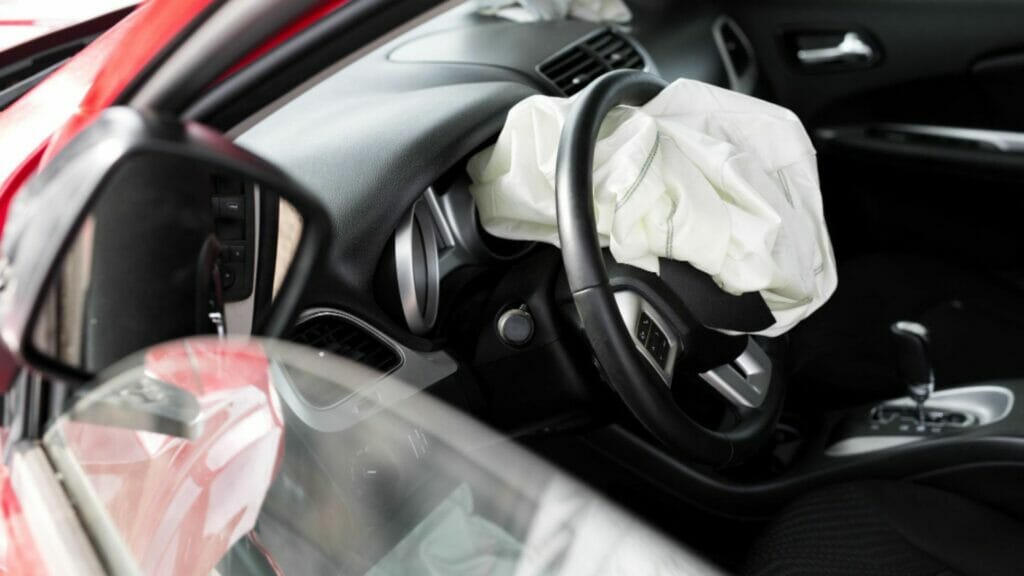
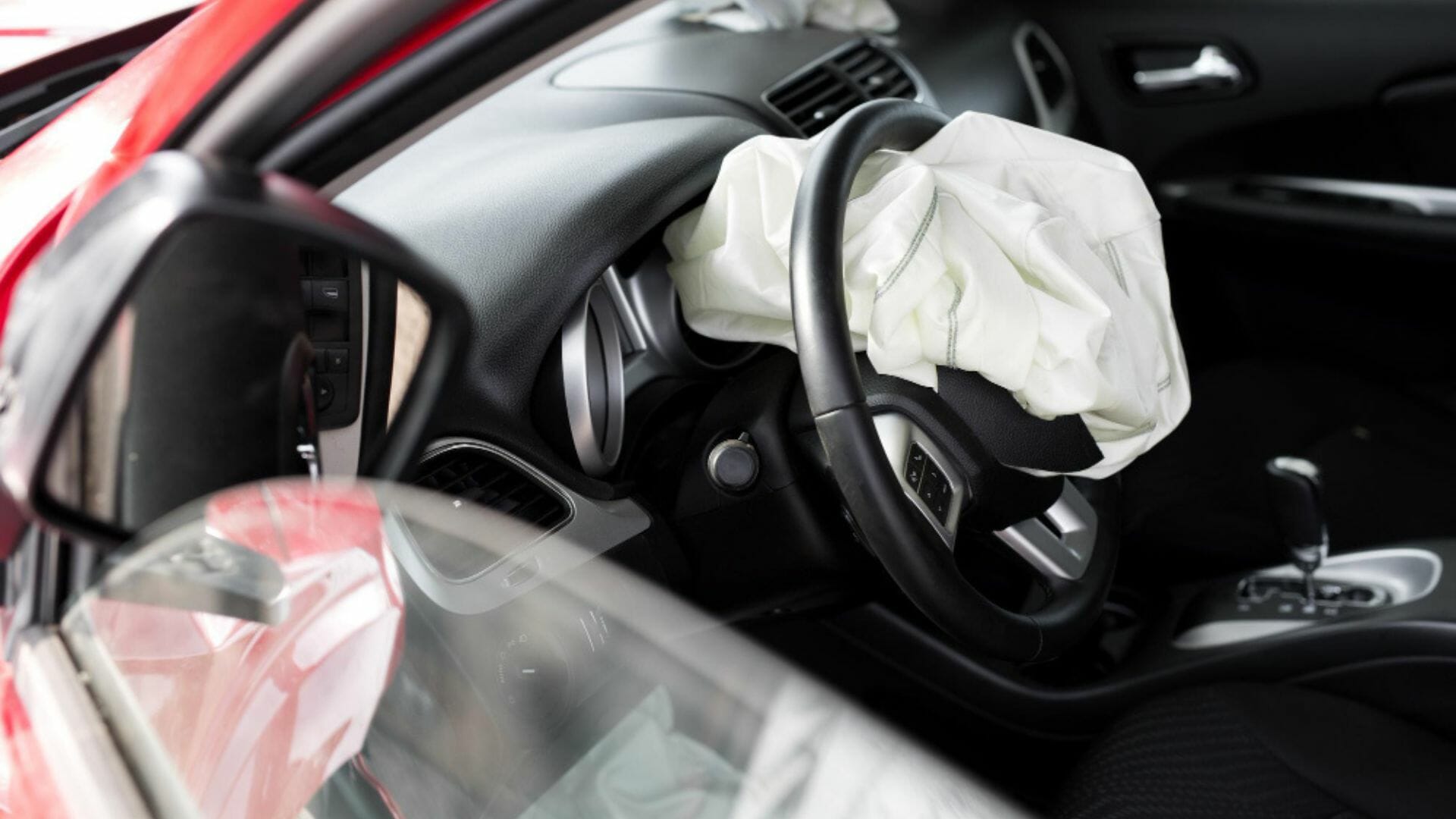
The airbag is supposed to save your life. When it doesn’t – when it fails to deploy in a survivable crash, when it deploys with too much force and breaks your jaw or your sternum, when it sprays metal fragments into your neck and eyes after a low-speed bump, or when it deploys unprompted on the Kennedy at 65 mph – the airbag becomes the injury. The Takata airbag recall is the largest automotive recall in United States history, and Takata-style ruptures continue to injure Chicago drivers and passengers years after the original recall notices went out. Discrete recalls from Honda, Ford, Stellantis, Hyundai-Kia, and other manufacturers add to the list. If you or someone you love was injured by a defective airbag in a Chicago crash anywhere in the city, in Cook County, or in DuPage, Lake, or Will county, the attorneys at Phillips Law Offices are ready to preserve the evidence, retain the right experts, and pursue every dollar the law allows. We have been doing this work since 1945.
Recognized for results in Illinois personal-injury law
Eight decades of trial work has put the firm and its lawyers on the lists that matter. A sample of the recognitions on file:
Super Lawyers
Personal Injury – Plaintiff
Million Dollar Advocates Forum
Member
Multi-Million Dollar Advocates Forum
Member
Best Lawyers in America
Personal Injury Litigation – Plaintiffs
AV Preeminent
Martindale-Hubbell peer rating
Illinois Trial Lawyers Association
Member in good standing
American Association for Justice
Member
Chicago Bar Association
Member
No aspect of these advertisements has been approved by the Supreme Court of Illinois. Past results do not guarantee future outcomes.
Where these crashes happen in Chicago and Cook County
An airbag-defect case can grow out of any crash anywhere – the Kennedy or Dan Ryan at speed, a low-speed parking-lot bump in a Loop garage, a Lake Shore Drive merge that ended in a guardrail, or an arterial T-bone at Western and Lawrence. The crash type does not matter; what matters is what the airbag did (or did not do) in response. A modern passenger vehicle has frontal driver and front-passenger airbags, knee airbags, side-impact thorax airbags, and side-curtain airbags. Each is a separate system with its own sensors, inflator, propellant, and deployment logic, and each is a potential defect claim. We see defective-airbag injuries in vehicles serviced at dealerships across Cook County, including used vehicles bought from auctions or independent lots that may never have completed the Takata or other open recalls.
The underlying crash in a defective-airbag case is investigated by the same agencies that work any Chicago crash: Chicago Police Department’s Major Accident Investigation Unit handles serious city-street crashes, Illinois State Police District Chicago handles the interstates and Lake Shore Drive, and Cook County Sheriff’s Police handles the unincorporated stretches. Victims of airbag-related injuries – shrapnel cuts, chemical burns, eye injuries, broken bones from over-deployment, head injury from no-deployment – are typically transported to Northwestern Memorial, Rush University Medical Center, Stroger Hospital (Cook County’s Level I trauma center), University of Chicago Medicine, or Mt. Sinai. Civil product-liability cases are filed in the Circuit Court of Cook County (or DuPage, Lake, or Will county depending on residence and where the vehicle was sold), or in federal court (Northern District of Illinois) where diversity jurisdiction supports it.
Common airbag-defect patterns we investigate
- Failure to deploy in a survivable crash. Sensor failure, calibration error, or electrical-harness defect leaves the airbag dormant in a crash where it should have fired. Result: the driver’s or passenger’s head strikes the steering wheel, the dashboard, or the windshield with full force. We pull the EDR (“black box”) download to confirm the deployment-decision data.
- Excessive-force deployment (Takata-style). The Takata ammonium-nitrate propellant degrades over time, especially in humid environments. When the inflator fires, it ruptures and sprays metal fragments into the driver’s neck, face, and chest. The Takata recall has involved tens of millions of vehicles; many remain unrepaired.
- Unprompted deployment. The airbag fires with no crash. A pothole on Lake Shore Drive, an electrical fault on the Kennedy at 70 mph, or a sensor glitch in a parked car triggers a deployment that itself causes the injury – and often causes a secondary crash.
- Side-curtain and side-thorax airbag failures. Side airbags are supposed to fire in a T-bone, a rollover, or a side-impact pole strike. When they don’t, the occupant’s head strikes the side window or the B-pillar. These claims often arise out of left-turn T-bones and rollover crashes.
- Manufacturer design defect. The airbag system was designed in a way that creates an unreasonable risk – sharp edges on the airbag module, a propellant chemistry prone to degradation, a deployment threshold set too low for low-speed parking impacts.
- Manufacturing defect. The system was designed correctly but a specific unit was built wrong – wiring miswired, propellant batch contaminated, inflator housing weakened.
- Failure-to-warn / recall-related claims. The manufacturer knew of the defect but failed to notify owners promptly, or the dealer who had your vehicle in for service should have completed the recall and did not. NHTSA recalls and 49 CFR Section 573 manufacturer notification rules govern the duty.
- Commercial-vehicle airbag failures. Defective airbags in delivery vans, rideshare vehicles, charter buses, and trucks pull in commercial coverage and FMCSA-style records.
- Counterfeit airbag replacements. A body shop installed a non-OEM or counterfeit airbag module after a prior crash, and the replacement fails (or deploys hazardously) in the next crash. The body shop, the parts supplier, and the original manufacturer all may be liable.
Injuries that bring families to a defective-airbag lawyer
- Severe facial lacerations from shrapnel or from a torn airbag fabric
- Eye injuries – corneal abrasion, retinal detachment, blindness – from shrapnel, hot propellant, or direct deployment force
- Broken nose, jaw, and orbital-bone fractures from over-force deployment
- Chemical burns from the airbag propellant (sodium azide or ammonium nitrate residue)
- Internal injuries from metal-fragment penetration into the neck, chest, or abdomen
- Hearing damage from deployment pressure inside an enclosed cabin
- Traumatic brain injuries from no-deployment crashes where the head struck the steering wheel or dashboard
- Sternum and rib fractures from over-force deployment
- Wrongful death from shrapnel embedded in the neck or carotid artery (the signature Takata fatality pattern)
Who is liable in a Chicago defective-airbag case
Airbag-defect cases sit in product liability, and Illinois law extends liability up and down the chain of distribution. Identifying every responsible party is how we unlock the layered coverages that make full recovery possible.
- The airbag manufacturer (Takata and its successor companies, Autoliv, ZF/TRW, Joyson Safety Systems, Daicel, others) for design and manufacturing defects in the inflator, propellant, or module.
- The vehicle manufacturer that selected and installed the defective airbag (Honda, Acura, Toyota, Ford, Stellantis (FCA), Hyundai-Kia, Nissan, GM, Subaru, BMW, Mercedes, and others, depending on the recall).
- The distributor or importer in the chain of sale.
- The dealership that sold the vehicle, especially in cases of failure to disclose an open recall.
- A service center or body shop that installed a counterfeit or non-OEM airbag module, or that had the vehicle in for service during an open recall window and failed to complete the recall.
- A used-vehicle dealer or auction that resold a vehicle with an open recall, depending on the facts.
- The at-fault driver in the underlying crash (if the airbag was supposed to save you from someone else’s negligence) – a separate claim under the auto-liability rules.
- Your own UM/UIM carrier if the underlying at-fault driver was uninsured or underinsured – mandatory coverage under 215 ILCS 5/143a.
The Illinois and federal law that drives a defective-airbag case
- Illinois strict product liability. Illinois adopted strict liability in tort in Suvada v. White Motor Co., 32 Ill. 2d 612 (1965). A defective product that is unreasonably dangerous and that causes injury is actionable without proof of negligence.
- Negligent product design and manufacture. Separate negligence theories run in parallel with strict liability and often allow broader discovery into the manufacturer’s testing, internal reports, and recall conduct.
- Failure to warn. Manufacturers have a continuing duty to warn of dangers discovered after sale. Recall conduct – timing, content, follow-up – is squarely in scope.
- Statute of repose – product liability: 735 ILCS 5/13-213 – generally 10 years from first sale of a new product, with exceptions for concealment and continuing duty to warn.
- Statute of limitations – personal injury: two years from the date of injury (or discovery) under 735 ILCS 5/13-202.
- Wrongful death: two years under 740 ILCS 180/2.
- Modified comparative fault (50% bar): 735 ILCS 5/2-1116.
- Federal recall framework: 49 U.S.C. Section 30118 (NHTSA defect determinations) and 49 CFR Part 573 (manufacturer notification of defects and noncompliance). The manufacturer’s NHTSA filings, Part 573 reports, and recall completion data are core discovery.
- Federal Motor Vehicle Safety Standards (FMVSS). FMVSS 208 (occupant crash protection) is the controlling federal standard for airbag systems and is part of every airbag case.
- Tort Immunity Act: 745 ILCS 10/8-101 – if a government-owned vehicle is involved (a CTA bus, a city or county fleet vehicle), the one-year limit and formal notice apply.
What to do in the first 72 hours after a Chicago airbag injury
- Get medical attention first. Airbag-related injuries hide. A shrapnel cut can hit the carotid artery; chemical-propellant exposure can cause respiratory damage; deployment force can cause aortic injury. Northwestern Memorial, Rush University Medical Center, University of Chicago Medicine, and Stroger Hospital are the Level I trauma options in Chicago; Mt. Sinai handles serious crashes on the West Side. Tell the ER it was an airbag injury – the workup is different.
- Call 911 and make sure a written police report is generated. CPD MAIU works the serious city-street crashes. Illinois State Police District Chicago works Lake Shore Drive and the interstates. Cook County Sheriff’s Police handles the unincorporated stretches. The report should specifically note “airbag deployed,” “airbag did not deploy,” or “shrapnel injury.”
- Do not let the car be scrapped. The single most important piece of evidence in an airbag-defect case is the airbag module itself, the inflator, the propellant residue, and the steering wheel or dashboard the airbag deployed from. Insurers move fast to total the car and send it to salvage. Tell your insurer in writing that the vehicle must be preserved.
- Run the VIN against NHTSA recalls. Go to nhtsa.gov/recalls and look up your vehicle identification number. Save a copy of the result. If there is an open Takata or other airbag recall, that is the foundation of the failure-to-warn claim.
- Do not give a recorded statement to the manufacturer’s representative or the at-fault driver’s insurer. They call within days specifically because they know you are still in shock. You are not required to talk to them. Decline politely and refer them to counsel.
- Call a defective-airbag lawyer right away. We need to send spoliation letters to the insurer, the body shop, and the salvage yard within days, and we need to coordinate a controlled inspection of the vehicle and the airbag module by a qualified engineer before anything is altered or disposed of.
How Phillips Law Offices investigates a Chicago defective-airbag case
- Day 1 – Vehicle preservation. We send written spoliation letters to the at-fault driver’s insurer, your own insurer, the body shop, and any salvage yard with possession of the vehicle. We secure storage of the vehicle and the airbag module on terms that prevent any further alteration.
- VIN-specific recall and NHTSA records pull. We pull the National Highway Traffic Safety Administration recall history, the manufacturer’s 49 CFR Section 573 notification filings, and the recall completion data on the specific VIN. We also pull any TSBs (technical service bulletins) and prior-complaint records.
- Expert engineering inspection. We retain a qualified airbag and occupant-restraint engineer to download the airbag control module (ACM) data, inspect the inflator, sample the propellant, and document the deployment (or non-deployment) sequence. We pair the engineer with a biomechanics expert who maps the injury pattern to the airbag’s behavior.
- Medical and life-care workup. We coordinate with treating physicians and, where the injuries warrant it, life-care planners, vocational economists, and ophthalmology and reconstructive-surgery experts. Eye injuries and disfiguring facial scars often need long-term planning.
- Insurance and corporate discovery. We identify every layer of coverage – the manufacturer’s product-liability coverage, the dealer’s garage policy, the body shop’s policy, the at-fault driver’s auto policy in the underlying crash, and your own UM/UIM – so the full coverage is on the table.
Meet the attorneys who will work on your case

Stephen D. Phillips
Managing Partner. Decades of trial experience in serious-injury and wrongful-death litigation.

Stephen J. Phillips
Partner. Focuses on complex personal-injury and commercial-vehicle cases throughout Illinois.


Terrence M. Quinn
Partner. Litigation focus on catastrophic injury, wrongful death, and trial practice.

Alec D. Mesrobian
Associate. Works on case investigation, discovery, and trial preparation in serious-injury matters.
What our Illinois clients have said
“Stephen Phillips and his team were absolutely incredible to work with. They were professional, responsive, and genuinely cared about my case.”
Reagan Tokoly
“Phillips Law Offices handled my case with professionalism and care. They kept me informed throughout the entire process.”
Brandon DeWitt
“The team at Phillips Law Offices was outstanding. They fought hard for my case and got me the compensation I deserved.”
Dani Berny
Client testimonials reflect individual experiences and are not a guarantee of any particular result. Every case is unique and is evaluated on its own facts.
Frequently asked questions
Is my airbag still under recall?
Check the National Highway Traffic Safety Administration’s recall lookup at nhtsa.gov/recalls using your vehicle identification number (VIN). The Takata airbag recall is the largest automotive recall in U.S. history; tens of millions of vehicles built between 2002 and 2015 are affected, and a number of those have not yet had the repair completed. There are also discrete recalls from Honda, Ford, Stellantis, Hyundai-Kia, and other manufacturers for non-Takata airbag issues. We pull the recall history on the specific VIN of your vehicle the day we are retained.
Does it matter that I never got the recall notice?
Notification failure is its own claim. Federal law requires manufacturers to mail recall notices to the last-known registered owner and to make reasonable efforts to reach used-vehicle owners. If the manufacturer’s records were stale or the dealer who serviced your vehicle never notified you, those facts are part of the failure-to-warn case. Many Takata-related cases involve owners who never got the recall letter or got one years late.
Can I sue the manufacturer, the dealership, or both?
Illinois product liability law allows claims against everyone in the chain of distribution – the airbag manufacturer (such as Takata, or its successor companies), the vehicle manufacturer that installed it, the distributor, and the dealership that sold it or serviced it. We typically name the airbag manufacturer and the vehicle manufacturer in the primary claim, and may add the dealership where it had specific knowledge of the defect (for example, on a recall vehicle the dealer was supposed to fix).
How does the statute of repose differ from the statute of limitations?
The statute of limitations is 735 ILCS 5/13-202 – two years from the date of injury to file suit. The statute of repose for product liability is 735 ILCS 5/13-213 – generally a 10-year outer limit from first sale of a new product. Older vehicles often present a repose issue. Illinois case law recognizes exceptions where the manufacturer’s later concealment, misrepresentation, or recall conduct restarts the clock – and recalls themselves can extend the manufacturer’s continuing duty to warn. We screen every airbag case for repose carefully and do not file cases that the statute will defeat.
What evidence do I need to preserve after an airbag injury?
The vehicle – do not let an insurer total and scrap it. The airbag module itself must be physically preserved for inspection by a defect expert. The shrapnel, the inflator, the propellant residue, and the steering wheel or dashboard the airbag deployed from are all evidence. We send a written spoliation letter to the insurer, the body shop, and any salvage yard the day we are retained, and we coordinate a controlled inspection of the vehicle and the airbag module by a qualified engineer.
How long do I have to file a defective airbag lawsuit in Chicago, Illinois?
Two years from the date of injury (or the date the injury was discovered) for personal injury under 735 ILCS 5/13-202. Two years from death for wrongful death under 740 ILCS 180/2. The statute of repose for product liability is 10 years from first sale of a new product under 735 ILCS 5/13-213, with exceptions. If your injury involved a government vehicle, the Tort Immunity Act (745 ILCS 10/8-101) sets a one-year limit and notice requirement. Move fast: defect cases require expert inspection of evidence that disappears when a car is scrapped.
Do I have to pay anything upfront to hire Phillips Law Offices?
No. We handle Chicago defective-airbag cases on a contingency fee. There are no hourly bills and no out-of-pocket cost to retain us. We advance the case costs (expert inspections, depositions, document discovery) and are reimbursed from the recovery. If there is no recovery, you owe us nothing.
Hablamos español
Si usted o un ser querido resultó herido por bolsas de aire defectuosas en Chicago o en cualquier parte de Illinois, llámenos al (312) 346-4262. La consulta es gratis y no cobramos honorarios a menos que ganemos su caso.
Contact our Chicago defective airbag lawyer
If you have been injured by a defective airbag in a Chicago crash anywhere in Cook County, or in DuPage, Lake, or Will county, call Phillips Law Offices for a free, no-obligation case review. The single most important thing is to preserve the vehicle – do not let it be scrapped. Call (312) 346-4262 or use our contact form right away.
Free, confidential case review
Phillips Law Offices, 161 N Clark St #4925, Chicago, IL 60601. Monday-Friday, 9am-5pm. Calls answered 24/7.
Phillips Law Offices, North Clark St, Chicago
Related Phillips Law Offices pages
- Chicago Product Liability Lawyers (main practice page)
- Defective Car Lawyer
- Manufacturer Defect Lawyer
- How Fast Does an Airbag Deploy?
- Chicago Car Accident Lawyers
- Traumatic Brain Injury
- Stryker Orthopedics Hip Implant Recall
Page reviewed by the attorneys at Phillips Law Offices. The information on this page is for general education only and is not legal advice. Reading this page does not create an attorney-client relationship. Past results do not guarantee a similar outcome. No aspect of these advertisements has been approved by the Supreme Court of Illinois.