
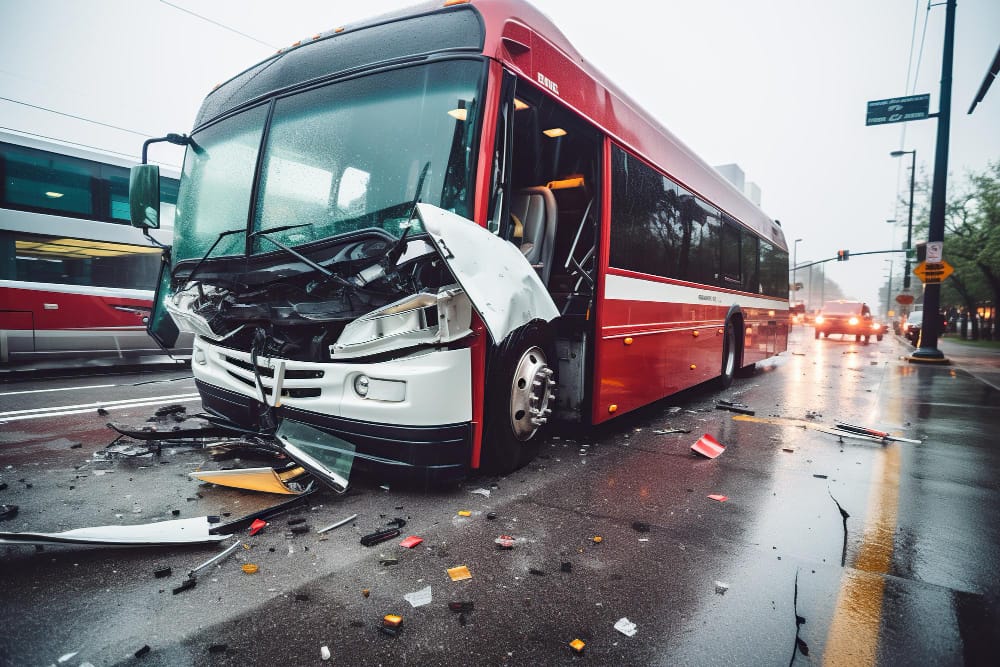
A bus accident can change your life in just a few seconds. Whether you were riding a city bus, walking across the street, driving your own vehicle, or riding a bicycle, a serious collision can leave you dealing with painful injuries, expensive medical bills, lost income, and uncertainty about your future. One of the first questions many injured victims ask is: Who is responsible for paying for my damages?
The answer is not always simple. Unlike a typical car accident involving two private drivers, bus accidents often involve multiple parties. Depending on how the crash happened, liability may fall on the bus driver, the bus company, a government agency, another motorist, a maintenance contractor, or even the manufacturer of a defective vehicle part.
Understanding who is legally responsible is one of the most important steps toward recovering compensation. If you have been injured in a Chicago bus accident, an experienced attorney can investigate the facts, identify every liable party, and pursue the maximum financial recovery available under Illinois law.
Why Determining Liability Matters
Liability simply means legal responsibility for an accident. Before an insurance company or court awards compensation, someone must be shown to have caused or contributed to the crash through negligence or wrongful conduct.
Identifying every liable party is important because bus accident cases often involve severe injuries and substantial financial losses. Medical treatment, rehabilitation, future healthcare expenses, lost wages, reduced earning capacity, and pain and suffering can easily result in damages worth hundreds of thousands—or even millions—of dollars.
If the wrong party is blamed or an important defendant is overlooked, injured victims may receive far less compensation than they deserve.
Common Causes of Chicago Bus Accidents
Chicago’s streets are among the busiest in the country. Every day, thousands of buses operated by the Chicago Transit Authority (CTA), school districts, tour companies, airport shuttles, and private transportation companies travel through congested intersections, construction zones, and crowded neighborhoods.
Bus accidents happen for many reasons, including:
- Distracted driving
- Speeding
- Driver fatigue
- Failure to yield
- Unsafe lane changes
- Running red lights
- Poor bus maintenance
- Brake failure
- Tire blowouts
- Defective steering systems
- Dangerous road conditions
- Inexperienced drivers
- Poor weather conditions
Sometimes only one factor causes the collision. In many cases, however, several parties contribute to the accident, making liability more complex.
Can the Bus Driver Be Held Responsible?
Yes. Bus drivers have a legal duty to operate their vehicles safely and protect passengers, pedestrians, and everyone sharing the road.
Because buses carry dozens of passengers and weigh significantly more than passenger vehicles, bus drivers are expected to exercise an especially high level of care.
A bus driver may be liable if they were:
- Speeding through traffic
- Texting or using a phone while driving
- Driving under the influence of alcohol or drugs
- Ignoring traffic signals
- Following vehicles too closely
- Driving while fatigued
- Making unsafe turns
- Failing to check blind spots
- Driving aggressively
Even a brief lapse in attention can result in catastrophic injuries because buses require much longer stopping distances than ordinary vehicles.
When Is the Bus Company Liable?
Many bus accidents involve private transportation companies. These companies can often be held responsible for accidents caused by their employees or their own negligence.
A bus company may be liable if it:
Failed to properly hire qualified drivers, ignored an employee’s poor driving history, skipped required background checks, failed to provide adequate training, pressured drivers to meet unrealistic schedules, neglected routine maintenance, or knowingly allowed unsafe buses to remain in service.
Illinois law often allows employers to be held responsible for the negligent actions of employees who are performing their job duties. This means an injured victim may have a claim against both the driver and the transportation company.
Since companies generally carry larger insurance policies than individual drivers, identifying employer liability can significantly increase the compensation available.
Is the Chicago Transit Authority (CTA) Responsible?
Many bus accidents involve CTA buses operating throughout Chicago.
If a CTA driver caused the crash through negligence, the CTA itself may be legally responsible because it employs the driver and operates the public transportation system.
However, claims against government entities differ from ordinary personal injury cases.
Government agencies often have unique procedural rules, shorter filing deadlines, special notice requirements, and additional legal defenses that do not apply to private companies.
Waiting too long can seriously affect your right to recover compensation. This is one reason why speaking with an experienced Chicago bus accident attorney as soon as possible is so important.
Can Another Driver Be Liable?
Not every bus accident is caused by the bus driver.
Many crashes occur because another motorist behaves recklessly around large buses.
Examples include drivers who:
Cut directly in front of a bus, make unsafe lane changes, ignore traffic lights, drive distracted, speed through intersections, drive while impaired, or fail to yield the right-of-way.
If another driver’s negligence caused the collision, they may be responsible for injuries suffered by bus passengers, pedestrians, cyclists, or occupants of other vehicles.
Sometimes multiple drivers share fault, requiring a detailed investigation to determine each party’s percentage of responsibility.
Can More Than One Party Be Responsible?
Absolutely.
Many Chicago bus accidents involve several negligent parties at once.
For example, imagine a bus driver is speeding while a maintenance contractor failed to repair worn brakes. At the same time, another driver suddenly changes lanes without signaling.
In this situation, all three parties may have contributed to the crash.
Illinois follows a system of comparative fault, meaning liability can be divided among multiple defendants based on each party’s contribution to the accident.
An experienced attorney investigates every possible source of liability to maximize the compensation available to the injured victim.
Could a Maintenance Company Be Responsible?
Many bus companies hire outside contractors to inspect, maintain, and repair their vehicles.
If mechanics fail to properly inspect critical safety systems or perform negligent repairs, they may share responsibility for an accident.
Examples include:
Failing to replace worn brakes, ignoring steering problems, improperly installing replacement parts, overlooking damaged tires, or failing to identify mechanical defects during inspections.
Maintenance records often become important evidence in these cases.
Can a Bus Manufacturer Be Liable?
Sometimes an accident happens because of a defective bus or faulty component rather than driver error.
Manufacturers can potentially be held liable if a design defect or manufacturing defect makes the vehicle unreasonably dangerous.
Examples include defective:
- Brakes
- Steering systems
- Tires
- Suspension components
- Fuel systems
- Emergency exits
- Seat restraints
Product liability cases often require engineers, accident reconstruction experts, and technical investigations to determine whether defective equipment contributed to the crash.
What About Dangerous Road Conditions?
Occasionally, poorly maintained roads contribute to bus accidents.
Large potholes, missing traffic signs, malfunctioning traffic signals, inadequate lighting, unsafe construction zones, or dangerous road design may all increase the risk of collisions.
Depending on the circumstances, a city, county, state agency, or road maintenance contractor could share liability.
Claims involving public entities often involve additional legal procedures and strict deadlines, making prompt legal action especially important.
How Is Liability Proven?
Determining liability requires far more than reviewing a police report.
A thorough investigation may include:
Accident scene photographs, surveillance footage, onboard bus cameras, witness statements, driver logs, maintenance records, black box data, medical records, expert testimony, and accident reconstruction analysis.
Your attorney may also review employment records, driver training documents, inspection reports, cellphone records, and toxicology reports if impairment is suspected.
The sooner this evidence is collected, the better. Important evidence can disappear quickly after a serious accident.
What Compensation May Be Available?
If another party caused your injuries, you may be entitled to recover compensation for both economic and non-economic damages.
Depending on your case, compensation may include payment for emergency medical care, hospitalization, surgeries, rehabilitation, prescription medications, future medical treatment, lost wages, reduced earning capacity, pain and suffering, emotional distress, permanent disability, disfigurement, and loss of normal life.
Families who lose a loved one in a fatal bus accident may also have the right to pursue compensation through a wrongful death claim under Illinois law.
Every case is different, and the value of a claim depends on factors such as the severity of injuries, available insurance coverage, long-term medical needs, and the strength of the evidence.
What Should You Do After a Chicago Bus Accident?
The actions you take immediately after a bus accident can significantly affect your claim.
Seek medical treatment as soon as possible, even if your injuries initially seem minor. Some serious injuries, including concussions and internal bleeding, may not produce immediate symptoms.
Report the accident to law enforcement, preserve photographs of the accident scene and your injuries, collect witness information if possible, and avoid giving recorded statements to insurance companies before speaking with an attorney.
Most importantly, do not assume the bus company or insurance carrier will treat you fairly. Their goal is often to minimize payouts, not maximize your recovery.
Why You Need an Experienced Chicago Bus Accident Attorney
Bus accident claims are usually far more complicated than ordinary car accident cases.
Multiple insurance companies may be involved. Government agencies often have unique legal protections. Evidence must be preserved quickly, and large transportation companies frequently have teams of attorneys defending their interests from the very beginning.
An experienced Chicago bus accident lawyer knows how to investigate complex accidents, identify every liable party, calculate the full value of your damages, negotiate aggressively with insurers, and take the case to trial if necessary.
Having experienced legal representation allows you to focus on your recovery while your attorney handles the legal process.
Contact a Chicago Bus Accident Attorney Today at Phillips Law Offices
If you or someone you love has been injured in a Chicago bus accident, you should not have to face the legal process alone. Determining who is liable can be complicated, especially when multiple parties, government agencies, or large transportation companies are involved. At Phillips Law Offices, our experienced legal team has spent decades representing injury victims throughout Chicago and fighting for the compensation they deserve. We thoroughly investigate every case, identify all responsible parties, negotiate aggressively with insurance companies, and are fully prepared to take your case to trial when necessary.
Contact a Chicago bus accident attorney today at Phillips Law Offices for a free consultation. There are no attorney fees unless we recover compensation for you.