

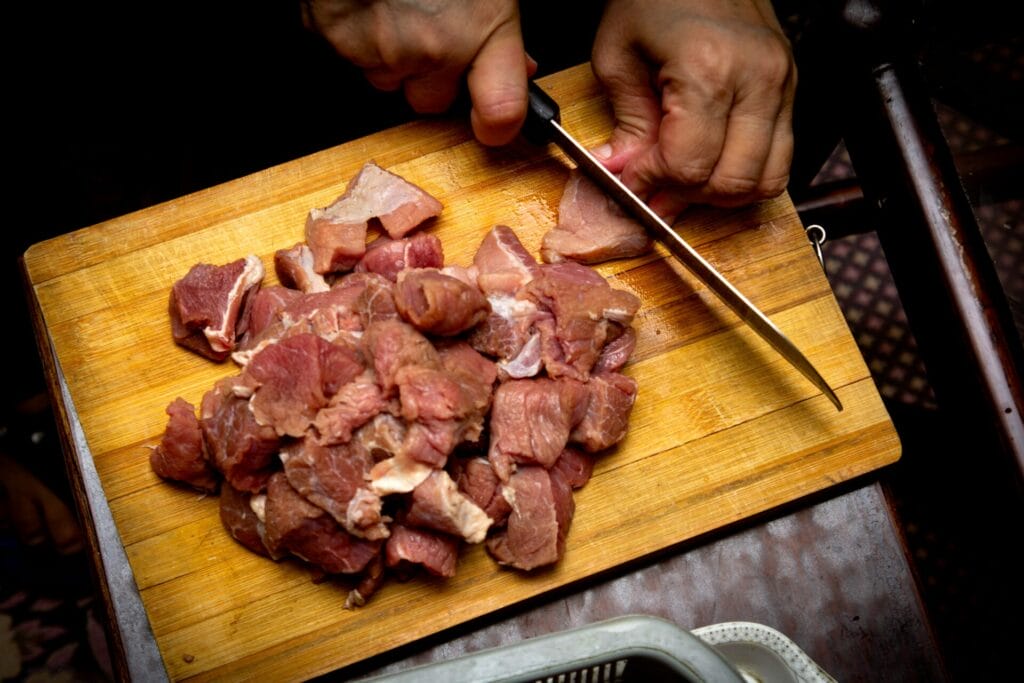
The CDC and USDA warn that cross-contamination, allowing raw meat, poultry, or seafood to come into contact with food that won’t be cooked, is one of the most common causes of preventable food poisoning. At home, this is a kitchen habit. In a restaurant, grocery store, or food service kitchen, it’s a food safety failure, and when it makes someone seriously ill, it can also be a legal claim.
If you got sick after eating at a restaurant or from food prepared by a business, and you believe cross-contamination was the cause, call Phillips Law Offices at (312) 346-4262 for a free consultation.
What Is Cross-Contamination?
Cross-contamination happens when harmful bacteria or parasites from raw meat, poultry, seafood, or eggs transfer to food that people eat without cooking, like salads, produce, bread, or ready-to-eat deli items. According to the CDC and USDA, this can happen through:
- Using the same cutting board or knife for raw meat and then for produce, without washing in between
- Storing raw meat above ready-to-eat food in a refrigerator, allowing juices to drip down
- Using the same platter for raw meat and then for cooked food
- Employees failing to wash hands after handling raw meat before touching other food
- Shared prep surfaces, utensils, or sinks that aren’t properly sanitized between uses
The Illnesses Cross-Contamination Causes
Raw meat, poultry, and seafood can carry bacteria and parasites including Salmonella, Campylobacter, E. coli, and Listeria. When these pathogens transfer to food eaten raw, they can cause:
| Pathogen | Common Symptoms | Typical Onset |
|---|---|---|
| Salmonella | Diarrhea, fever, stomach cramps | 6 hours to 6 days |
| E. coli (STEC) | Severe stomach cramps, bloody diarrhea, vomiting | 3 to 4 days |
| Campylobacter | Diarrhea, fever, stomach cramps | 2 to 5 days |
| Listeria | Fever, muscle aches, confusion (severe cases) | Up to 70 days |
Most cases resolve without lasting harm, but severe cases, especially E. coli infections that progress to hemolytic uremic syndrome (HUS), can cause kidney failure, and Listeria infections can be life-threatening for pregnant women, newborns, older adults, and people with weakened immune systems.
When Cross-Contamination Becomes a Legal Claim
Cross-contamination in your own kitchen is a personal risk you manage. Cross-contamination at a restaurant, caterer, grocery store, or food processing facility is a different matter; these businesses have a legal duty to follow food safety practices, and failing to do so can amount to negligence.
A viable claim typically requires:
- A diagnosed illness tied to a specific pathogen, ideally confirmed through stool testing
- A traceable source, such as a specific meal, restaurant, or product, especially if others who ate the same food also got sick
- Evidence of a food safety violation, which can include health department inspection records, employee practices, or a documented outbreak
Illinois restaurants and food establishments are required to follow food code standards enforced by local health departments, including rules on separating raw and ready-to-eat food, proper cooking temperatures, and employee hygiene. A pattern of health code violations, prior complaints, or a confirmed multi-person outbreak significantly strengthens a claim.
What Compensation Can Cover
- Emergency room or urgent care visits
- Hospitalization for severe dehydration or complications
- Lost wages from missed work
- Pain and suffering
- Long-term costs if the illness causes kidney damage or other lasting effects
Illinois Deadlines to File a Claim
| Claim Type | Time Limit | Illinois Statute |
|---|---|---|
| Personal injury (negligence) | 2 years from the date of injury | 735 ILCS 5/13-202 |
| Product liability | 2 years from discovery of the injury | 735 ILCS 5/13-213 |
How to Protect Yourself and Your Family at Home
The CDC and USDA recommend these core habits to prevent cross-contamination in your own kitchen:
- Use one cutting board and set of utensils for raw meat, poultry, and seafood, and a separate one for produce and ready-to-eat food
- Store raw meat, poultry, and seafood in sealed containers on the bottom shelf of the refrigerator so juices can’t drip onto other food
- Wash hands, cutting boards, utensils, and countertops with hot, soapy water after they contact raw meat
- Never place cooked food back on a plate that held raw meat without washing it first
- Use a food thermometer to confirm meat and poultry reach a safe internal temperature
What to Do If You Think You Got Sick From Cross-Contamination
- See a doctor and ask about stool testing to identify the specific pathogen.
- Save any leftover food, packaging, or receipts if available.
- Report it to your local health department, especially if you ate at a restaurant, since this can trigger an inspection.
- Ask others who ate the same meal if they also got sick, this can help establish a pattern.
- Consult an attorney before speaking with the restaurant’s insurance company.
Frequently Asked Questions
Can I sue a restaurant for food poisoning?
Yes, if you can show the restaurant’s negligence, such as improper food handling or health code violations, caused your illness. A confirmed diagnosis and a clear connection to a specific meal make these cases much stronger.
What if I’m not sure the restaurant is actually at fault?
An attorney can review health department inspection history, look for other complaints, and, if needed, work with investigators to determine the likely source of your illness.
Is a mild case of food poisoning worth pursuing?
It depends on your specific losses, including medical bills and missed work. More severe cases involving hospitalization or lasting complications generally carry higher claim value.
Talk to an Illinois Food Poisoning Lawyer
Phillips Law Offices has represented injury victims across Illinois since 1945. If you believe a restaurant or food business’s negligence made you or a family member seriously ill, call (312) 346-4262 for a free consultation. We work on contingency, you pay nothing unless we win your case.
Related Resources: